

At the very beginning of the concert, Malikian introduces the audience to his own world with a gesture that transcends the traditional concert form – a short introduction becomes a prologue, and the sound of the violin becomes a narrative voice. In this gesture lies the promise that the evening will be more than a series of performances.
The composition Con mucha Nata reflects the author's sense of humor and playfulness. The seemingly playful title ( S puno vrmhnja – the title refers to abundance and playfulness) hides a complex rhythmic structure and virtuoso elements, reminiscent of jazz improvisation, but with roots in Middle Eastern melody. It combines the vitality of traditional music and classical discipline, which is Malikian's recognizable signature.
Bourj Hammoud can be interpreted as a tribute to the Beirut neighborhood where Malikian grew up. The melody evokes oriental colors, but also the pulse of the modern city. The rhythms evoke streets filled with different cultures; This is one of the most personal works in the program, almost a musical autobiography.
For Malikian, tango is a means of expression that recognizes the passion, irony and theater of everyday life. Niño Rata's composition combines tradition with a modern urban idiom, emphasizing the grotesque and satire. In that composition, Malikian creates tango without borders, recognizable but free from old clichés.
Las Milongas de Kairo, dedicated to his son Kairo, is one of Malikian's most successful fusions: the milonga/tango idiom, Spanish rock and urban hip-hop groove meet in the same score. The energy carries a club pulse, while the melody draws on Mediterranean-Middle Eastern melodies — Malikian uses this coloration as an emotional framework for the dedication, not as an ethnographic "postcard".
Bowie's ballad Life on Mars, in Malikian's arrangement, becomes an introspective concert moment. Orchestral grandeur is replaced by an intimate dialogue between violin and piano, emphasizing the fragility of the theme: the search for meaning in a world marked by illusions. The sound of the violin does not imitate the vocals, but reinterprets them - deepening Bowie's dystopian poetry, giving it a more universal tone.
One of the most demanding pieces in the violin repertoire, La Campanella by Niccolò Paganini , is synonymous with virtuosity. Malikian here not only demonstrates technical brilliance, but as a true performing star, he also conveys the spirit of the 19th century, when Paganini was a star par excellence. The sound of the violin truly resembles the ringing of a small bell, and the jumps and double notes still cause admiration today, almost two hundred years after the piece was written.
In the song Bacherolette by Icelandic singer-songwriter and actress Björk, Malikian recognizes the same passion for mixing genres that he himself cherishes. Björk's combination of electronic beats is transferred to the violin, which here takes on the role of conveying both rhythm and melody. The result is a theater of sound, a composition in which electronics and baroque drama meet. Malikian's violinist's handwriting reveals how Björk's music can live outside of a digital context.
The composition Waltz-scherzo for violin and orchestra, op. 34, composed for the violinist and Tchaikovsky's close friend Josef Kotek, represents a refined blend of Russian elegance and French grace. The lightness of the waltz is constantly intertwined with the virtuoso character of the scherzo, creating a score in which danceability and lyricism emerge in equal measure. For the soloist, this means a series of dazzling technical challenges – from fast passages to brilliant cadenzas – but in the interpretation of Ara Malikian, virtuosity does not remain a mere form: it is transformed into content, into joy and play, emphasizing Tchaikovsky's gift for virtuosity to always be the bearer of musical meaning.
The poetic title of the piece Pisando Flores ( literally "Trampling on Flowers") reflects its lyrical nature. This is a meditative point in the program, in which the violinist explores the softer registers of the instrument. The melody develops like an improvisation, and the rhythmic background creates a sense of levitation.
The final piece in the program, Nana arrugada, brings the simplicity of pop form to its most noble form. “Wrinkled Lullaby” is a meditation on time and transience, performed by Malikian with an honesty that transcends genres. It blends pop, classical lyrics, and personal confession into a universal musical message.
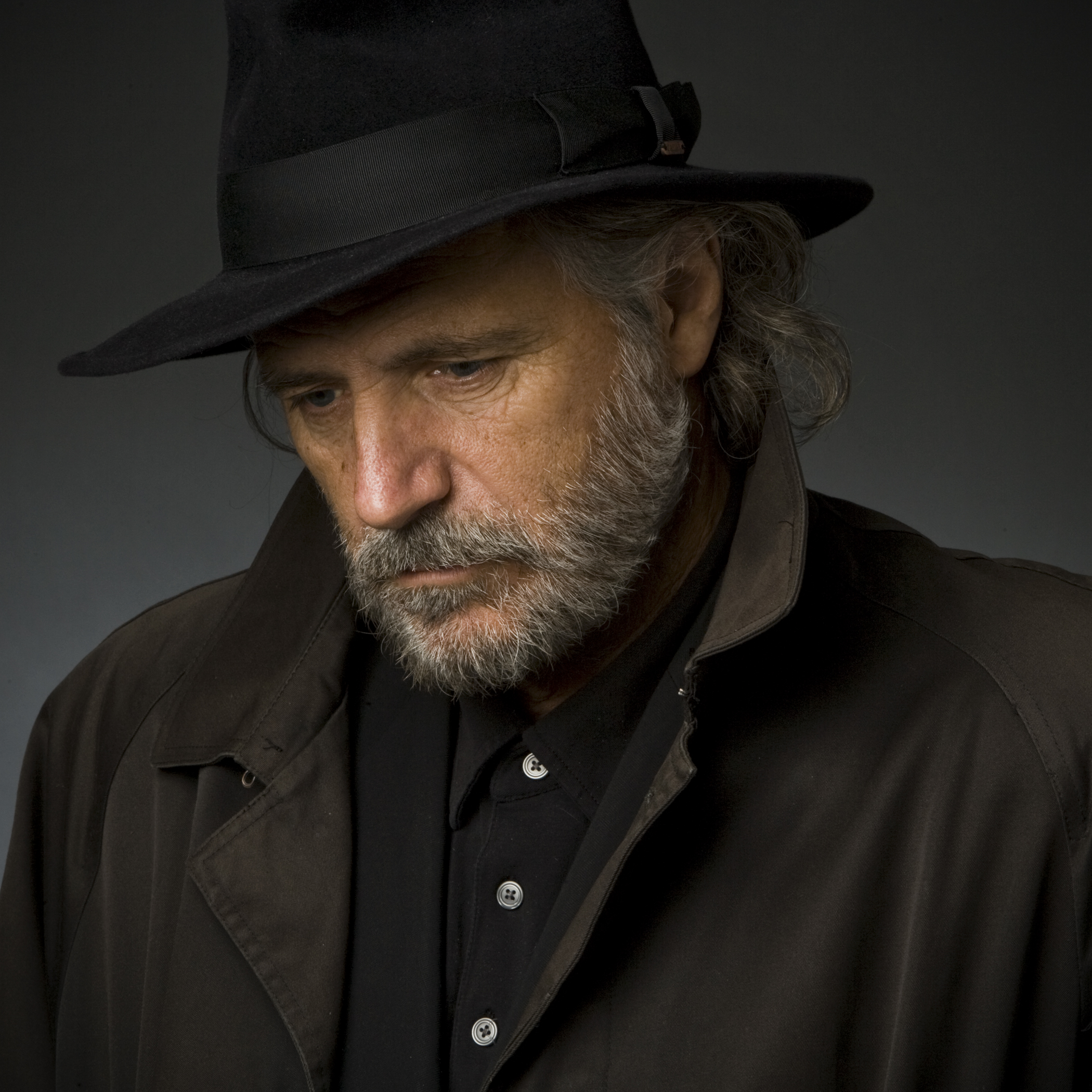
Ara Malikian was born in 1968 to an Armenian family. He began playing the violin at an early age, with his father as his first teacher. His talent was recognized despite the difficult circumstances of the Lebanese Civil War, which often forced him to study in shelters.
He gave his first significant concert at the age of 12. Two years later, conductor Hans Herbert-Jöris provided him with a scholarship from the German government to study at the University of Music and Drama in Hanover. At the age of 15, he became the youngest student accepted to that prestigious program. He continued his education at the Guildhall School of Music and Drama in London, and also studied with distinguished teachers such as Franco Gulli, Ruggiero Ricci, Ivry Gitlis, Herman Krebbers, and members of the Alban Berg Quartet.
He has won a number of awards at international competitions, including first prizes at the Felix Mendelssohn (Berlin, 1987) and Pablo Sarasate (Pamplona, 1995) competitions. In 1993, he received the German Ministry of Culture's award for artistic dedication and achievements.
He has performed in the most prestigious halls in the world: Carnegie Hall (New York), Salle Pleyel (Paris), Musikverein (Vienna), Ford Center (Toronto), National Auditorium and Teatro Real (Madrid), Tonhalle (Zurich), Barbican Center (London), Gran Teatro Falla (Cádiz), Teatro Ideal (Calahorra), Pedro Almodóvar Auditorium (Puertollano), as well as in Tokyo, Istanbul, Berlin, Athens, Venice, Los Angeles, Taipei, Hong Kong, Kuala Lumpur, Cuba, Bogotá, Munich, Barcelona, Bilbao, Mérida, Burriana and Quito. He has participated in festivals in Aspen, Colmar, Prades, Schleswig-Holstein, Braunschweig, San Sebastián, Segovia, Bergen, Freden, Metlach, Prague and Buñol.
As a soloist, he has performed with numerous orchestras, including the Tokyo Symphony Orchestra, Bamberg Symphony Orchestra, Zurich Chamber Orchestra, Genoa Opera, Madrid Symphony Orchestra (OSM), Portuguese Symphony Orchestra, Tübingen Chamber Orchestra, Moscow Virtuosi, Belgrade Philharmonic, Toulouse Chamber Orchestra and Armenian Philharmonic. He has performed under conductors such as Marissa Jansons, Peter Maag, Jesús López Cobos, Vladimir Spivakov, Miguel Ángel Gómez Martínez, Luis Antonio García Navarra, Vasily Sinaisky, Edmond de Stoutz, Gudni Emilson, Juan José Mena and Jo Ann Fallett.
Critics describe him as an artist who breaks down the boundaries between audience and performer. His concert evenings always have an element of performance: Malikian talks to the audience, dances on stage, transmits energy. In a world where labels are often sought, Ara Malikian remains elusive. He is a classicist and a rocker, an oriental storyteller and a European virtuoso, an improviser and a perfectionist. His music knows no boundaries, which is precisely why it reaches such a wide audience – from connoisseurs to those who are encountering classical music for the first time.
Petra Crnčević
Discounts are limited. Each concert at Peristil Vibreza has a limited total number of tickets that can be purchased at a discount. Discounts apply to the following categories of visitors:
Sponsors:
Ara Malikian
Intro
With a lot of Nata
from the album The Incredible Story of Violin (2016.)
Bourj Hammoud
from the album The Incredible Story of Violin (2016.)
Rat Boy (Tango)
from the album Search (2021.)
Las Milongas de Cairo
from the album Royal Garage (2019.)
David Bowie
Life on Mars?
Niccolo Paganini
Concerto for Violin and Orchestra in B minor, Op. 7
Movement III: Rondo alla campanella ("The Bell")
Birch
Bachelorette
from the album Homogeneous (1997.)
PI Tchaikovsky
Waltz-scherzo for violin and orchestra, op. 34
Ara Malikian
Pisando Flores
from the album The Incredible Story of Violin (2016.)
Wrinkled mother
from the album Small Garage (2021.)