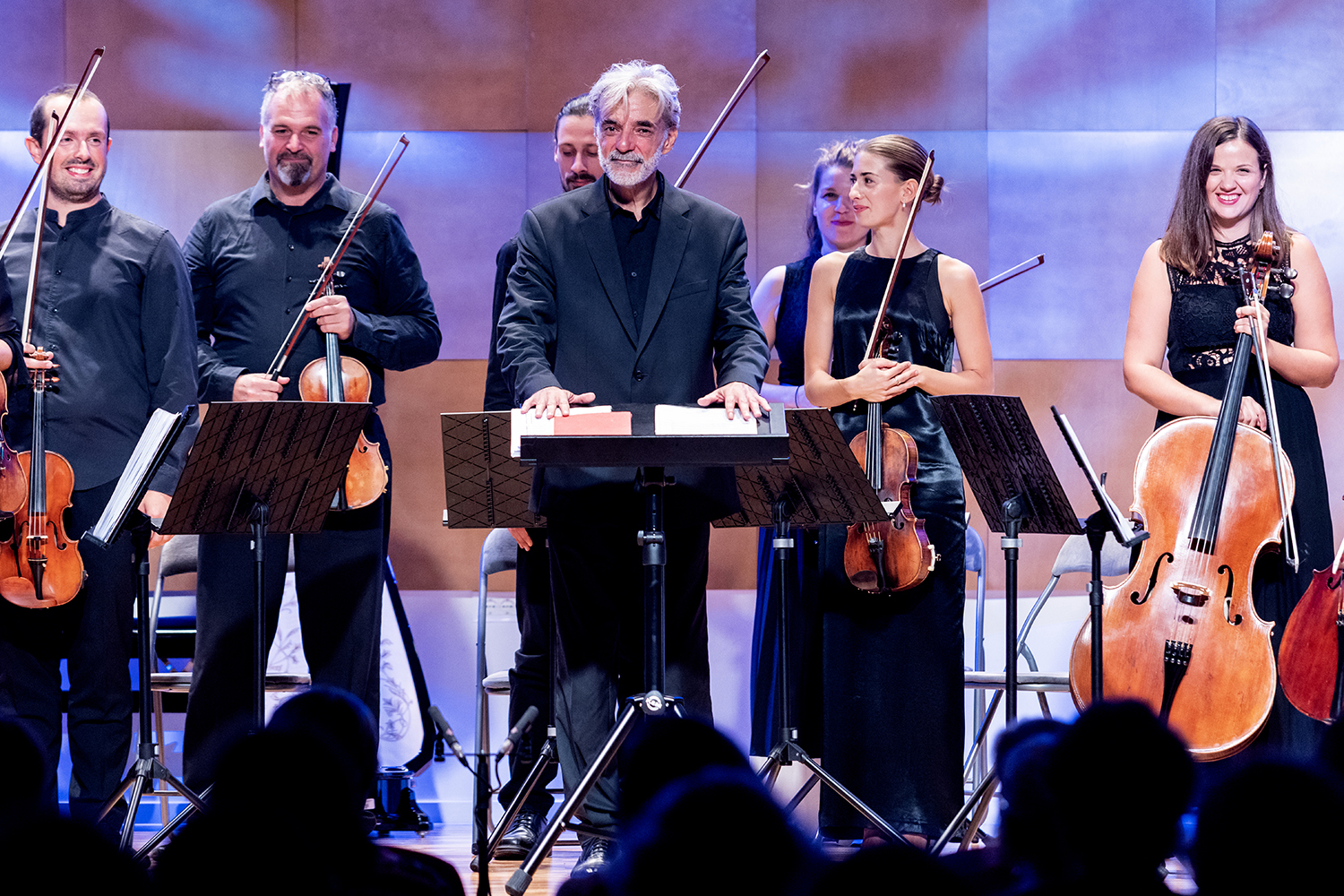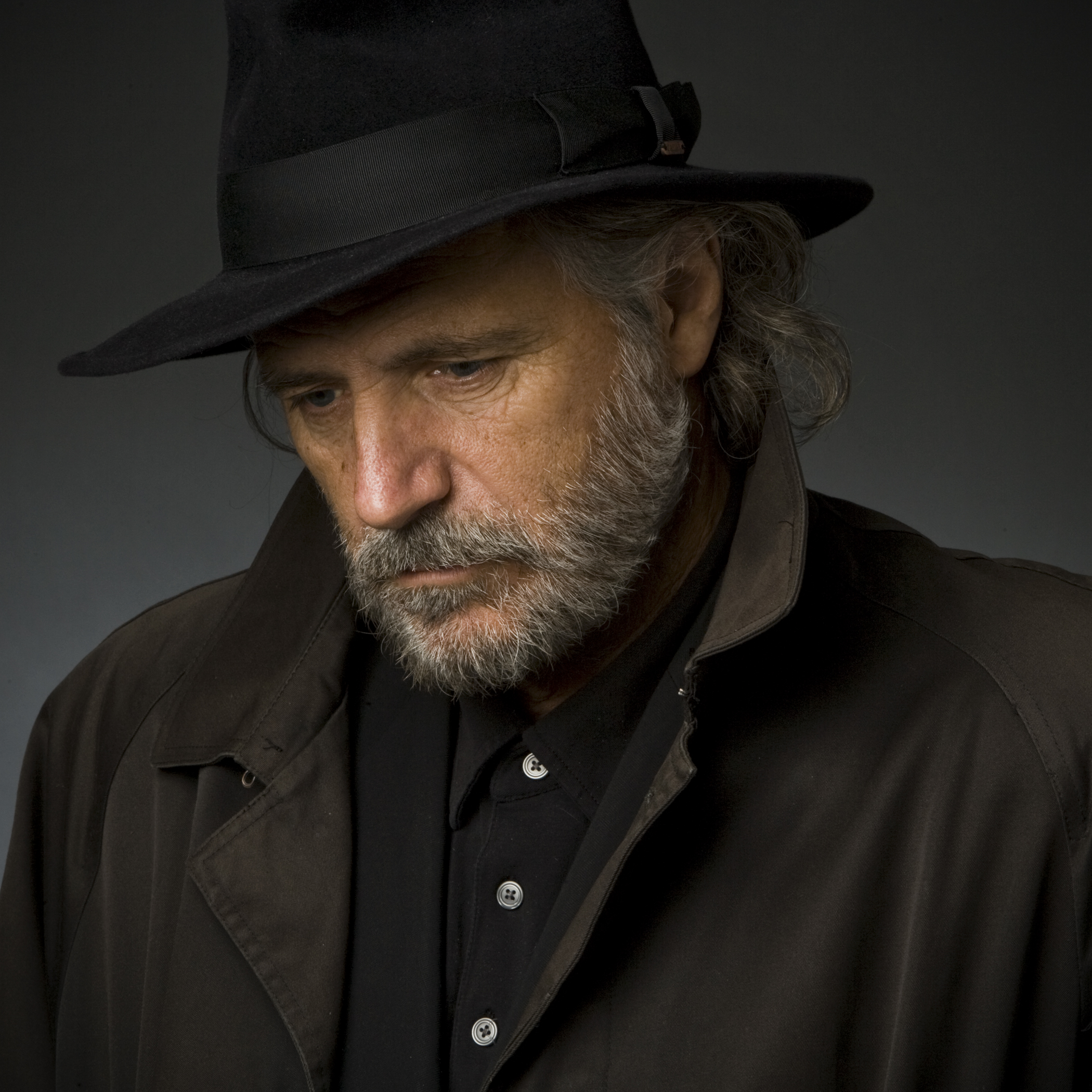
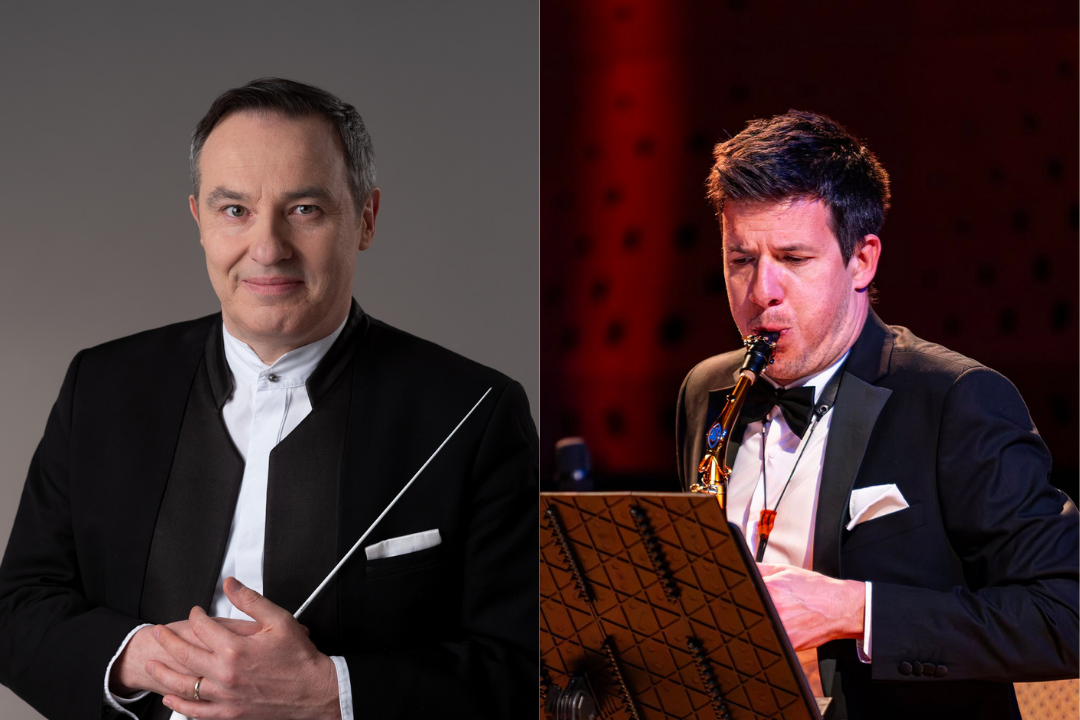

Ivan Repušić , conductor
Soloist: Gordan Tudor , alto saxophone
The long and rich creative life of Boris Papandopulos (1906–1991) branched out in unbridled creativity into different directions of musical inspiration, taking root and laying the foundations for different types and genres of art music, from early spiritual inspirations, opera, ballet and oratorio works, to concertos and solo works created according to the wishes and measures of individual musicians who commissioned compositions from the maestro, all the way to a diverse opus of orchestral and chamber-orchestral works. Many of these works were created on specific occasions, and the master often found his inspiration in the musical language of other composers. He was, as he is often described, stylistically eclectic, easily using the music of previous eras and contemporary sound, often more pretending than truly adopting some of the styles, and like a chameleon, skillfully changing the sound color from work to work. What is always recognizable is the ease, sovereignty, strength and directness of his language, in whatever direction he goes, from the early, archaic Passion of Our Lord Jesus Christ, which he creates inspired by the folk singing of the Velovaroš Split church heritage, to the almost avant-garde Concertant Music . In between are many works that could be viewed in the light of the neoclassical spectrum, and among them are the compositions he wrote as homage in the 1970s, such as Hommage à Bach or Hommage à Sorkočević . There is also Pintarichiana , a suite for strings, based on the compositions of Fortunato Pintarić, a Franciscan composer and organist who was active in northern Croatia at the end of the 18th century. Unlike the compositions in honor of Bach and Sorkočević, in which Papandopulo brings impressions written in a recognizably contemporary handwriting, in the Pintarichiana suite it is difficult to distinguish where the boundary is between the original classical expression he takes from the work of the composer Fortunato Pintarić and that which is recognizably Papandopulo's. Pintarić's compositions for piano and organ were published in a 1924 collection edited by Svetislav Stančić, and Papandopulo transfers some of them almost intact into his suite and envelops them in brilliant orchestration, in which we recognize Papandopulo in his penchant for opulence and branching of the style and playfulness that sometimes overwhelms the modesty and elegance of the adopted themes.
Award-winning composer and saxophonist Gordan Tudor (1982) is the author of broad musical perspectives, which give him a unique entry into the field of serious contemporary music, an entry from the side as a performer and as a musician with experience in alternative electro-pop music, who found himself at the center of the Croatian contemporary art and music scene, not only as a performer, but also as the author of a number of recognized compositions and a professor at the Split UMAS. One of the works that pushed him to the forefront was the ARP Concerto for Saxophone and Orchestra , composed in 2018 and premiered on March 4, 2019 at the Croatian National Theater in Split, with the author as a soloist and the HNK Split Orchestra, conducted by Ivo Lipanović. Gordan Tudor said about the creation of the composition: " The ARP Concerto for Saxophone and Orchestra was created at the urging of maestro Lipanović and is composed for the Split Croatian National Theatre Orchestra. In my head I had an old ARP synthesizer and orchestra trying to imitate some of his, now iconic sounds and sculptures by my favorite Jean (Hans) Arp. That was the original idea, and the final result is something completely different. The starting point for the Concerto was the ARP Quintet for Saxophone and String Quartet , which I successfully premiered in 2014 at the Music Forum in Opatija with the support of the TAJJ String Quartet." The concerto is composed in three movements that directly follow each other. The orchestral weave, laid on tonic chords filled with added tones, over which the soloist's long arabesque unfolds at the beginning of the first movement, exudes the softness of the Mediterranean atmosphere, but also the recognizable influences of Gallic music, impressionistic tone, watercolors of spilled colors, under which the rhythm pulsates and the virtuoso line of the saxophone develops. Winding seemingly on the verge of improvisation, the saxophone seems to follow the atmosphere created by the different layers of the orchestra. The dance-like dotted rhythms in the final part of the movement are like a drive for new arabesques in which the saxophone is joined by a second orchestral solo, only to come to a climax in the long, harmonically static major situations that open the chapter of the second movement of the concerto. The twist at the end of the movement leads to a dramatic end, and the last movement brings a new rhythmic dance episode in the style of a marching band, whose movement is filled with a virtuoso section of the saxophone, which is suddenly left without a backing and separates from the ground in a sumptuous cadence, showing lyrical virtuosity, gesticulation and suggestiveness of the line, only to rejoin the playful machinery of the orchestra in the finale.
Serenade for Strings in C major, Op. 48 could be considered a rare oasis of bright, classical peace in the universe of deeply emotional, often tragic and turbulent moods of the works of Pyotr Ilyich Tchaikovsky (1840–1893). The dense sound of the strings and the C major radiating stable warmth open a composition that is a kind of homage to classical elegance and balance, while at the same time smoldering with a lively, vibrating, recognizably Slavic sensibility of the author. The work, composed in the autumn of 1880, at the same time as the 1812 Overture , was perceived by Tchaikovsky as one of his best, believing that it would be more successful than the “loud and noisy” Overture , which he wrote “without warm feelings of love”. The serenade, as he claimed, was written “out of an inner need”, “it is a work from the heart, and so, I dare to hope, it is not without artistic qualities”. As he wrote, the first movement, Pezzo in forma di sonatina , “is a dedication to Mozart. I intended to imitate his style and I will be happy if I can come close to my model.” The opening is like a chorale, which opens the Apollonian contours of the movement. The dance rhythms and lightness that abound in his ballets are heard in the music of the next movement, in the tempo of a waltz, which brings an echo of 19th-century ballrooms and exudes Italian melodiousness, and the pizzicato and rallentanda at the end of the sections openly flirt with the music of the king of the waltz, Johann Strauss Jr. Tchaikovsky had been to Italy on several occasions before composing this piece. It does not bear the direct Italian stamp of the Italian Capriccio (also composed in 1880), but it exudes the Mediterranean exuberance and warmth of the melodies. The elegy is a tangle of longing melodies, reminiscent of the composer's operatic style with its dramatic note, and despite its inherently Russian melancholy, it carries the qualities of Italian singing, at times resembling an Italian strumpet accompanied by a pizzicato pulse, reminiscent of the quiet plucking of a guitar. The last movement is based on a Russian folk song, the so-called burlak , a song of boatmen from the Volga, which appears in the slow introduction of the movement, and then a fast dance theme appears, alternating with a lyrical second theme. The movement rests on a motivic play with a fast theme, before after heated sequences of sixteenth notes the slow theme from the introduction reappears and a reminiscence of the first movement appears in the form of an ascending C major scale. The irresistible fast dance appears again and everything ends with a powerful C major cadence.
- Zrinka Matic
The Zadar Chamber Orchestra has been operating since 1961 and is one of the most representative Croatian chamber ensembles. Today, it is led by maestro Ivan Repušić, a conductor from Zadar with an extremely active international career. The Orchestra has gone through a difficult path in its development. Founder Pavle Dešpalj and artistic directors Petar Vrbančić, Dragan Novak and maestro Ivan Repušić, have, through tireless effort and work, realized the goal clearly set at the beginning: to provide Zadar and its people with concerts and the joy of making music in their own city. To date, the Zadar Chamber Orchestra has held more than 150 concerts under the direction of Pavle Dešpalj, Igor Kuljerić, Petar Vrbančić, Valter Dešpalj, Maja Dešpalj-Begović, Antun Dolički, Branka Višić Karavid, Tetsuji Honne, Edo Mičić, Berislav Šipuš, Tomislav Fačini, Chikara Iwamura, Tonči Bilić and others. As soloists, alongside the Zadar string players, Radovan Vlatković, Giorgio Surjan, Boštjan Lipovšek, Marin Maras, Evelin Novak, Martina Filjak, Prerad Detiček, Ljiljana Molnar-Talajić, Pavica Gvozdić, Valentina Fijačko, Petrit Çeku, Srđan Bulat, Željko Milić, Vedran Kocelj, as well as numerous Zadar residents: Gordana Zubović Pavić, Jurica Šoša, Mario Šoša, Lucija Brnadić, Ankica Šoša Graziani, Boris Martinović and others. The orchestra has performed in Austria, France, Spain and at Croatian music festivals. The repertoire it cultivates includes works from Baroque, Classicism and Romanticism to contemporary music. The orchestra is particularly fond of performing works by Croatian composers, and regularly includes commissioned works by contemporary domestic authors in its repertoire. The concertmaster of the Zadar Chamber Orchestra is the renowned Croatian violinist Marco Graziani, who leads the Soloists and String Quartet, smaller groups that emerged from the same musical body. The Orchestra holds four to six concerts during the Concert Season.
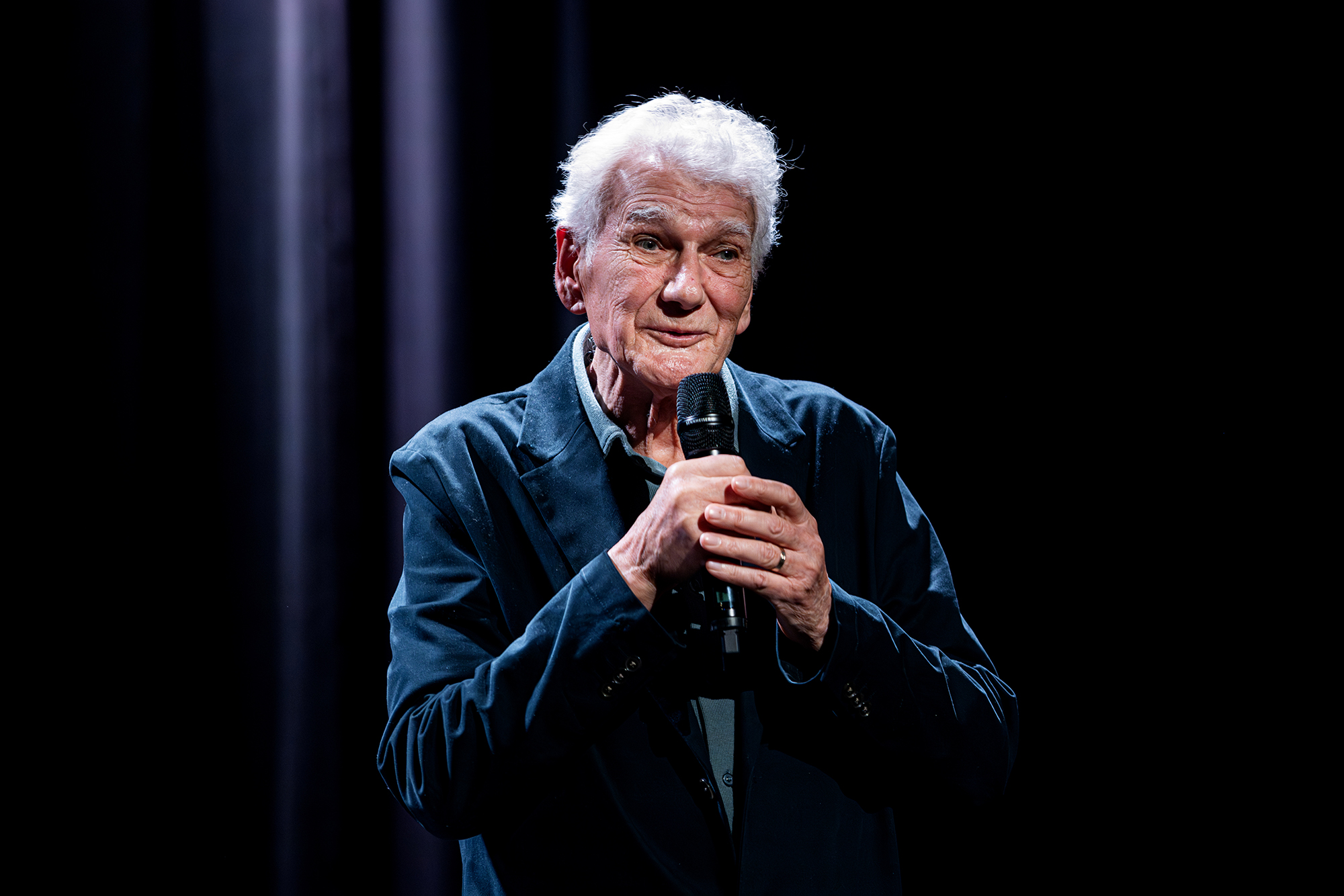
Ivan Repušić is the chief music director of the Leipzig Opera and chief conductor of the Weimar State Chapel. He is one of the most important Croatian conductors. He regularly performs in his homeland and leads the Zadar Chamber Orchestra as chief conductor. From 2017 to September 2026, he was chief conductor of the Munich Radio Orchestra, and from 2014 to June 2026, he was the first permanent guest conductor of the Deutsche Oper in Berlin.
He opened his tenure as chief music director of the Leipzig Opera at the start of the 2025/2026 season with the premiere of Giuseppe Verdi's Falstaff to excellent reviews. During the season, he led performances of Rigoletto, The Magic Flute, La bohème and The Cursed Dutchman , as well as the first performance of Tristan und Isolde . The 2026/2027 season will see the premieres of Eugene Onegin , Puccini's Triptych and Leoncavallo's Pagliacci alongside Orff's Carmina Burana, as well as revivals of Tosca , Salome and Tristan und Isolde.
He will lead the Weimar State Chapel, at the head of which he made his debut as chief conductor in August 2024, in performances of Mahler's Third Symphony , Brahms' German Requiem with the Central German Radio Choir, and guest appearances in Bayreuth and Cologne. He is also waiting for his debut performance at the Leipzig Gewandhaus, leading the Gewandhaus Orchestra with pianist Alexander Malofeev, La bohème at the Berlin State Opera, a concert with the NDR Radiophilharmonie, etc.
In the area of discography, the album Golden Age with Erin Morley and Lawrence Brownlee and the Munich Radio Orchestra ( Pentatone ) was awarded the "best solo album" by Oper! Magazine ( Oper! Awards 2026 ), and the New York Times and BBC Music Magazine included it among the best classical music albums of 2025.
The album Dora Pejačević: Complete Symphonic Works , with Staatskapelle Weimar, mezzo-soprano Annika Schlichit and pianist Martina Filjak ( Audite ), was included in the wider selection of the German Record Critics' Award (PdSK) in July 2026. As an ambassador of Croatian music, Ivan Repušić recently performed and recorded Frane Parać's opera Judith with the Munich Radio Orchestra and the HRT Choir, and Boris Papandopulo's Croatian Mass with Croatian soloists and the Bavarian Radio Choir, which earned two Porin awards in the BR-Klassik edition : for best performance and best classical music album.
Maestro Repušić began his professional work in German cultural institutions as the first conductor of the Hanover State Opera (2010-2013), where he was also the music director (2016-2019). During this time, he conducted numerous premiere opera titles (Salome, The curse of Faust, The Haunted Dutchman, Manon Lescaut, Aida…) and symphony concerts. After her debut performance at the Deutsche Oper in Berlin in a production of Puccini's opera La bohème (2011), he was appointed conductor, and in 2014 the first permanent guest conductor, and to date he has conducted more than 150 performances of about twenty different opera titles, including Macbeth, Tosca, Turandot, La bohème, Eugene Onegin, Nabucco, Krabul dance, The Traviata, Carmen, The magic flute, Lucia di Lammermoor, Tannhäuser, La Gioconda, Falstaff, Don Carlo, Francesca da Rimini, The Haunted Dutchman and Dr. As chief conductor of the Munich Radio Orchestra since 2017, he has conducted a series of concert productions of operas (Luisa Miller, The Two Foscari, Attila, Lombards, Swallow, The villas, Ero from the other world, Ernani, Simon Boccanegra…) and orchestral works.
He is a guest of leading opera houses, including the Bavarian State Opera (The Carnaval Dance, Don Carlo), Berlin State Opera (Rigoletto, Tosca), Zurich Opera House (Sicilian Vespers), Dresden Semperoper (Faust, Cavalleria rusticana/Pagliacci, The magic flute, The Traviata, Simon Boccanegra, Macbeth, Tosca, Don Carlo, Madama Butterfly, Turandot), Hamburg State Opera (Love potion, Rigoletto, La bohème, Tosca, Simon Boccanegra), Comic Opera in Berlin (Rigoletto, The Traviata), Aalto Musiktheater in Essen (Falstaff), New National Theatre, Tokyo (The Traviata).
He performs in concert halls such as Munich's Gasteig, Herkulessaal and Prinzregententheater, Berlin Philharmonic Hall, Berlin Konzerthaus, Vienna Musikverein, Festspielhaus in Baden-Baden, Prague's Smetana Hall, Kultur- und Kongresszentrum Hall in Luzern, and at prestigious festivals, including Beethovenfest Bonn and Verdi in Parma.
He has conducted numerous distinguished orchestras, including the Deutsche Oper Berlin, the Berlin Radio Symphony Orchestra, the hr-Sinfonieorchester, the Bavarian State Orchestra, the North German Radio Philharmonic in Hanover, the Vienna Symphony Orchestra, the Giuseppe Verdi Symphony Orchestra in Milan, the Mannheim National Theater Orchestra, the Prague Symphony Orchestra, the Norwegian National Opera Orchestra in Oslo, the Brussels Philharmonic, the Tokyo Philharmonic, and many others.
He has recorded thirty albums for BR-Klassik, Warner Classics, cpo, Pentatone, Audite, Cantus. The recordings have been awarded with awards such as ICMA , Opus Klassik , Diapason d'Or , Oper! Awards and Porin . He has achieved particularly fruitful discographic collaboration, including works by Croatian composers, with the Munich Radio Orchestra, as well as the Bavarian Radio Choir with leading world soloists, and with the State Chapel Orchestra in Weimar.
Ivan Repušić received his primary and secondary music education and his first conducting experience in Zadar. He studied conducting at the Zagreb Academy of Music in the classes of Igor Gjadrov and Vjekoslav Šutej. He furthered his studies with Jorma Panula, Gianluigi Gelmetti, Kazushi Ono and Donald Runnicles. He began his professional career at the Croatian National Theatre in Split (2002), where he held the positions of chief conductor and director of the Opera (2006–2009). During that time, he conducted numerous performances of the Italian, French, Russian and Croatian opera repertoire (G. Verdi: Don Carlos, Aida, Simon Boccanegra, Troubadour, NabuccoMr. Puccini: Suor Angelica, Gianni Schicchi, Manon Lescaut, La bohème; PI Tchaikovsky: Eugene Onegin; Ch. Gounod: FaustMr. Donizetti: Lucia di Lammermoor, Love potionMr. Rossini: The Barber of Seville; R. Leoncavallo: And Pagliacci; J. Gotovac: Ero from the other world; J. Hatze: Povratak etc.). He served as the director of the music program of the Split Summer Festival (2006-2009) and the Dubrovnik Summer Festival (2010-2012). In addition to his conducting engagement, he was also dedicated to pedagogical work at the Academy of Arts, University of Split (2004-2016), where he earned the title of associate professor. Since 2005, he has been the chief conductor of the Zadar Chamber Orchestra.
For his artistic achievements, he has been awarded numerous high Croatian awards, including: Vladimir Nazor , Vatroslav Lisinski , Milka Trnina , Orlando , the City of Zadar Award. The University of Zadar awarded him an honorary doctorate for exceptional contribution to the field of cultural and artistic creativity (2021). In October 2024, the President of the Republic of Croatia decorated him with the Order of the Croatian Daystar with the image of Marko Marulić for exceptional achievements in culture and the promotion of Croatian culture at home and abroad. For his special artistic contribution to the realization of the entire program of the Dubrovnik Summer Festival, he received the Grand Prix Orlando (2026).
Gordan Tudor (1982) is one of the leading musicians of his generation, active as a soloist, composer, chamber musician and pedagogue. He is a multiple winner of national and international saxophonist and composer competitions and the recipient of the highest artistic and discographic awards.
He has performed throughout Europe and North America in various chamber ensembles and as a soloist with many orchestras. He is a member of the acclaimed Papandopulo Quartet, soprano saxophonist and founder of Trio GIG, founder and member of the duo Tudor/Batoš, as well as the duo Tudor-Režić. He is one of the members and founders of the band Leut magnetic, which combines electronic, pop and indie music.
He has composed for saxophone, chamber ensembles, electronics, theater, documentary and animated films. His compositions are regularly featured in the programs of famous festivals at home and abroad. They have been performed on all continents, and premiered by famous artists, such as: James Carter, Eric Aubier, Claude Delangle, Zoran Dukić, Jean-Denis Michat, Phillipe Geiss, Matjaž Drevenšek, Krešimir Bedek, Petrit Ç eku, Maroje Brčić, Ivana Bilić, Nikola Krbanyevitch, Nikola Fabijanić, Linda Mravunac Fabijanić, Dani Bošnjak, Terezija Cukrov, Ivan Batoš, Goran Jurković and others, and ensembles, including: Amstel Quartet, TAJJ String Quartet, Strasbourg Saxophone Ensemble, Kug-Sax-Sippia, Croatian National Theatre Orchestra in Split, Zagreb Saxophone Quartet, Sebastian String Quartet, Zadar Chamber Orchestra, Varaždin Chamber Orchestra, Cantus Ensemble, XXL Tuba Quartet, Splithesis Contemporary Music Ensemble, S/UMAS Contemporary Music Ensemble, SOS Ensemble, Mobilis Saxophone Quartet, Papandopulo Quartet, Split Guitar Quartet, GMO Sanctus Domnio et al. He is especially proud that his ballet The Plumber, after its premiere at the Zagreb Music Biennale in 2009, remained in the repertoire of Teatro &TD for five seasons, and was also performed as the only dance performance as part of the 60th Dubrovnik Summer Festival.
He currently leads the international saxophone class at the Academy of Arts in Split (UMAS), where he founded the Contemporary Music Ensemble S/UMAS, of which he is the artistic director. Until 2017, he also worked as a saxophone professor at the Josip Hatze Music School in Split and as a visiting professor - assistant professor of saxophone at the Academy of Music in Novi Sad (AUNS).
He started playing the saxophone at the age of 13 at the Josip Hatze Music School (prof. D. Colić) in Split. He graduated in 2004 from the Zagreb Academy of Music (prof. D. Sremec). He continued his studies at the Amsterdam Conservatory (prof. A. Bornkamp) and graduated summa cum laude in 2006. He continued his studies at the Salzburg Mozarteum (E. Rousseau) in 2002 and at the Conservatoire National Supérieur de Musique et de Danse in Paris (prof. C. Delangle) in 2005/06, as a scholarship holder at the Amsterdam Academy of the Arts, where he also specialized in composition in addition to the saxophone.
He is the winner of numerous national and international saxophonist competitions. He is the recipient of the Rector's Award, the Judita Award for the most complete musical achievement at the 52nd Split Summer Festival, the Zagreb Philharmonic Award for the best young musician in Croatia, the Lions Club Grand Prix, second prize at the Marenostrum International Composition Competition in Berlin, the Annual Award for Young Composers of the Rudolf & Margita Matz Fund. He has earned two Porin awards for the best classical music composition (2013 and 2014), and three for the album Post Nubila Phoebus (Cantus, 2015) with works by contemporary Croatian composers. In 2021, he released the album Les Yeux Clos dedicated to the solo saxophone repertoire, and in 2025, the award-winning album Sit Back, Relax, which he created in collaboration with guitarist Mislav Režić.
Gordan Tudor is a D'Addario Woodwinds Artist.
Boris Papandopulo: Pintarichiana
Sonatina
Shepherdess
Rondo
Dudas
Gordan Tudor: ARP Concerto for saxophone and string orchestra (first performance of the string version)
***
Pyotr Ilyich Tchaikovsky: Serenade for Strings
Pezzo in forma di sonatina: Andante non troppo – Allegro moderato – Andante non troppo
Waltz: Moderato – Tempo di valse
Elegies: Larghetto elegiac
Finale: Theme Russo, Andante – Allegro con spirito