Menu

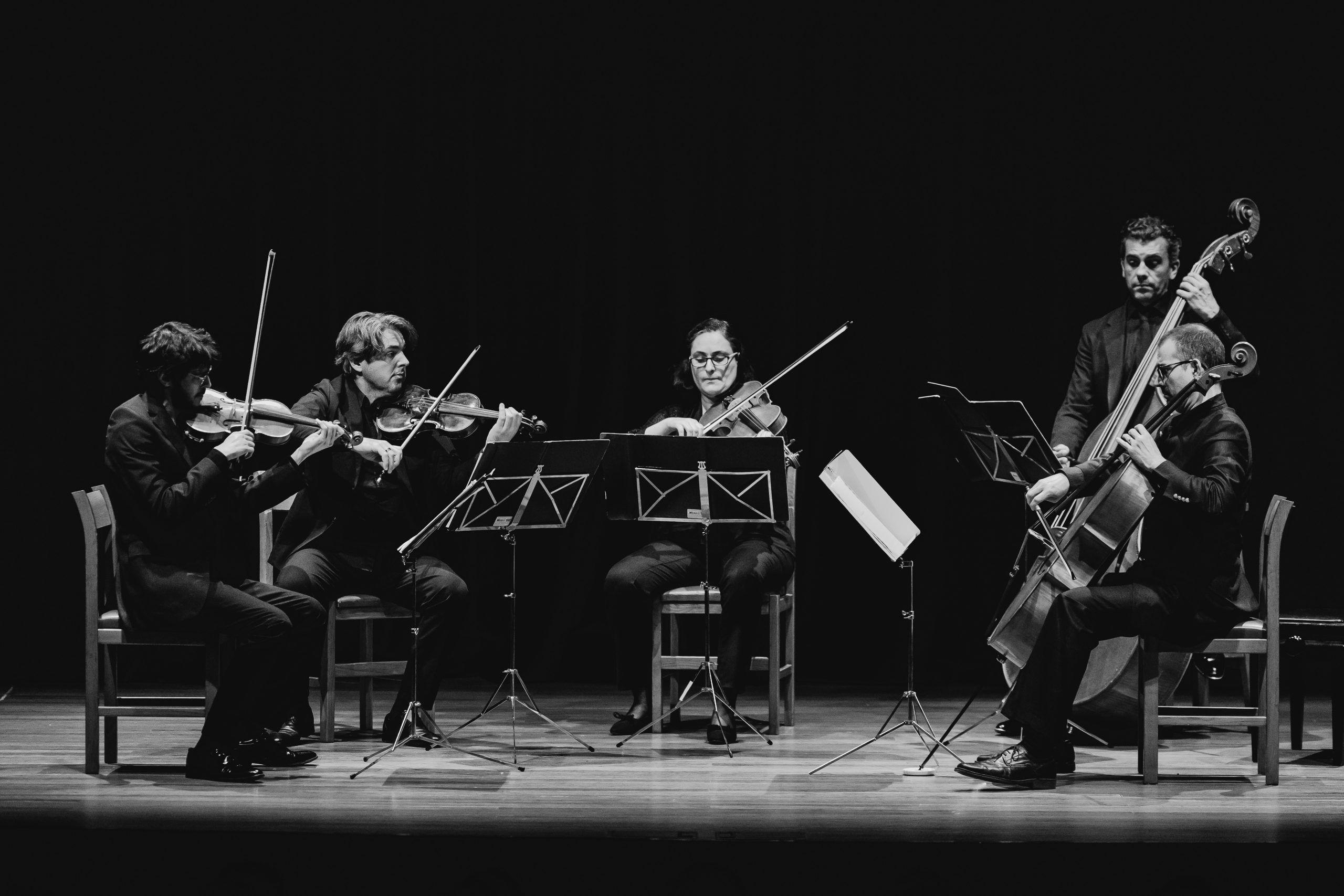

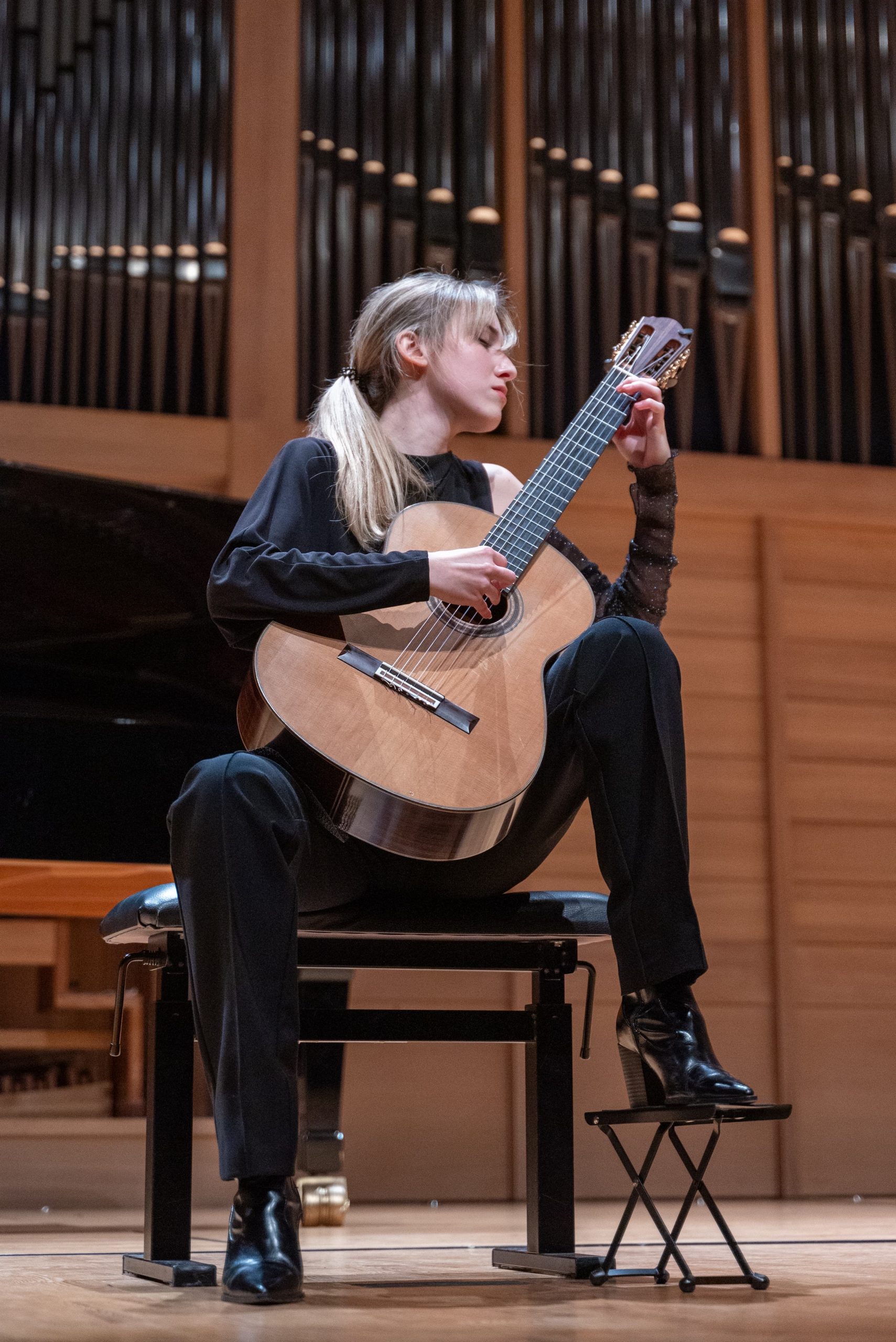
Janay Tulenova, first violin
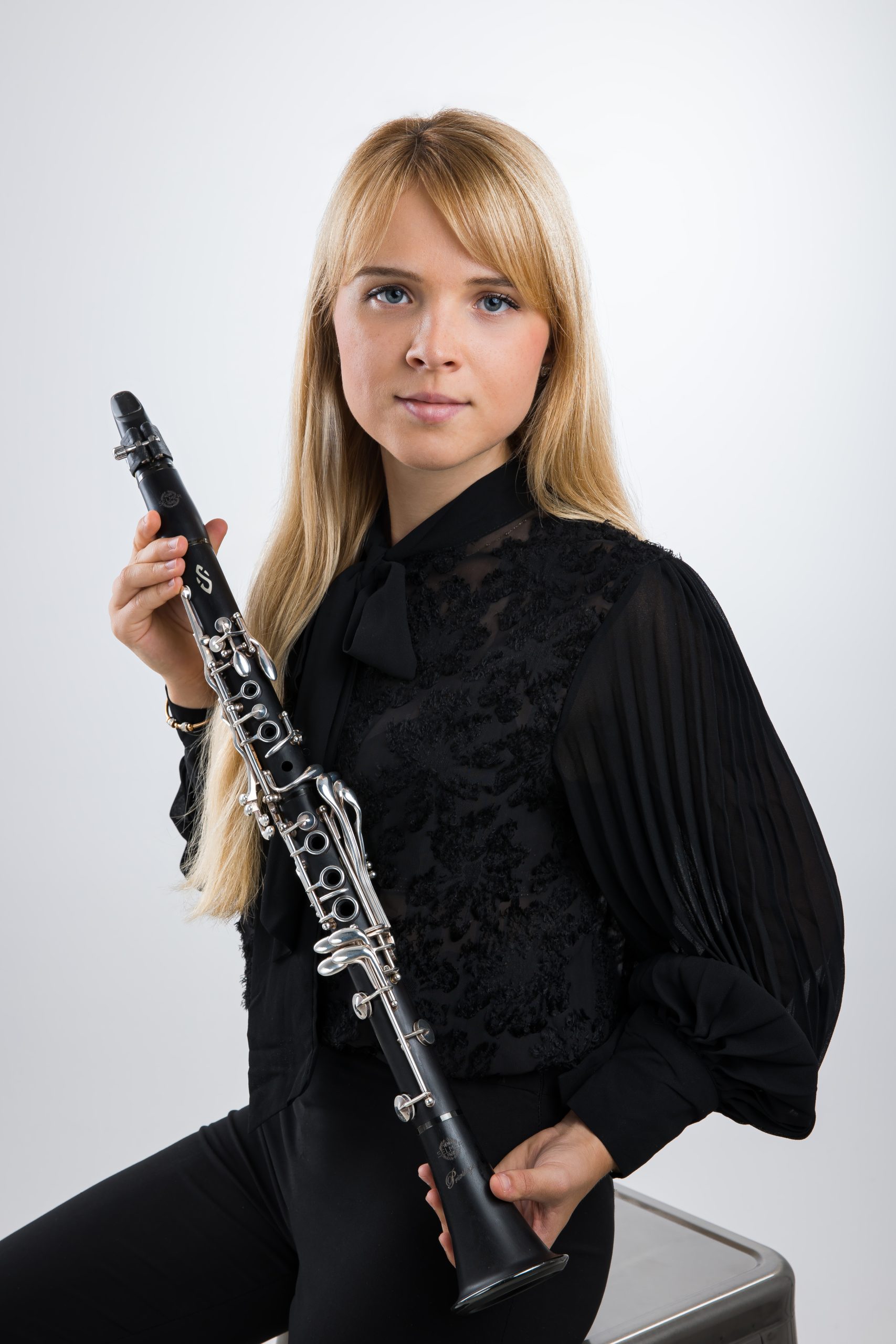
Luis Morais, second violin
Giorgia Veneziano, viola
Sergio Mastro, cello
Felipe Medina, double bass
Our program will include:
Gustav Mahler: Be careful, don't rush. (Carefully, without rushing), first movement of the Fourth Symphony in G major (arranged for strings)
Erich Wolfgang Korngold: fairy tale pictures (Pictures from a fairy tale)
Antonín Dvořák: Second String Quintet in G Major, Op. 77
Gustav Mahler's Fourth Symphony (1860 - 1911) is the last in a tetralogy consisting of his first four symphonies, known as the "Wunderhorn Symphonies" because Mahler uses songs from the collection in them. The Boy's Wunderhorn (The boy's magic horn). This famous anthology of German folk songs and music, published between 1805 and 1808 by Achim von Arnim and Clemens Brentano, had a place in almost every German home, serving as an inspiration for numerous composers, from Schubert and Schumann to Mendelssohn and Brahms and even Schönberg, but it is especially associated with Mahler's name. He returned to these songs throughout his life, starting in 1884 with the cycle Lieder eines fahrenden Gesellen (Songs of a traveling child) as well as a number of solo songs, some of which became the basis of his "Wunderhorn symphonies", especially the Second, Third and Fourth.
The Fourth Symphony in G major is called The Heavenly Life (Heavenly life) is based on the poem The sky is full of violins. (Clear sky), whose text Mahler adapted, using fragments of it during the first three movements, before appearing in its entirety in the last, fourth movement of the symphony. The movements were composed in reverse order – the last movement was composed first, and the others subsequently – initially there were six movements, and later he reduced the symphony to four movements. Work on the symphony began in 1899 and was completed in August 1900.
Unlike Mahler's previous symphonies, this one is smaller in size and lighter in orchestration – it does not feature Mahler's recognizable bulky brass section, but only horns, trumpets, woodwinds and reduced strings with a harp. That is why the percussion section is interesting, containing cymbals, pennants, triangle, tam-tam and glockenspiel, along with timpani. This orchestration prompted a series of adaptations of the symphony for smaller ensembles – namely for a chamber orchestra as well as for strings alone, i.e. a string quintet.
The lyrics describe scenes and characters of life in heaven, or the afterlife, from the perspective of a child, which gives the work an innocence and warmth. Each movement is marked with a calm, moderate tone, but the composer does not provide programmatic instructions for the work (unlike previous symphonies). He wanted the audience to understand the music for its own sake: "I have the most beautiful names for the movements, but I do not want to reveal them to the critical crowd or to the listeners, only to subject them to banal misinterpretations and distortions."
The first movement is composed in sonata form, with flutes and flagons as an effect, in a tempo marked as Be careful, don't rush. (Carefully, without haste). The pastoral character reminiscent of a walk in nature is introduced by the first relaxed violin theme in G major, relatively short and melodious. The second theme in D major is presented in the style of a folk song by the cello, and Mahler instructs that it should be “sung broadly”. The development section is complex and polyphonically harmonious, increasingly moving away from the initial themes, reaching a climax in a dissonant fortissima, which leads into a fanfare that Mahler calls The little apple (small call to order). The recapitulation brings a celebratory mood leading into a slow and peaceful coda.
Erich Wolfgang Korngold (1897 - 1957) was probably the greatest child prodigy of his time. Born into a musical family (his father Julius Korngold was one of the most influential Viennese music critics), from an early age he listened to the music of his contemporaries, such as Mahler, Puccini and Richard Strauss, whose Elektra, according to his mother, he could play from beginning to end on the piano by heart as a small boy. At the age of six he began to write down his own melodies in a cajon, and after playing his cantata to Gustav Mahler, who declared him a genius, on Mahler's recommendation he continued his studies with Alexander von Zemlinsky, another influential Viennese composer, conductor and pedagogue. At the age of thirteen he wrote a suite fairy tale pictures (Pictures from a fairy tale). Originally written for piano, the suite was orchestrated under the mentorship of Zemlinsky. The original composition contained seven movements, but the second The Princess on the Pea lost. The premiere was in the Czech spa town of Karlsbad in 1911. The six surviving images show the unusually rich musical world of the young Korngold, filled with lush fin-de-siècle harmony – movement Enchanted Princess It is a sumptuous combination of elements of march and romance, an effect for which Korngold would later become widely known and famous while writing music for Hollywood films. Lord of the spirits it is imbued with the bittersweet melancholy that would dominate his opera from the 1920s, The whole city (Dead city). In the paragraph Gnomes the influence of Mendelssohn's stage music is felt for A Midsummer Night's Dream, as well as the rhythms of Strauss's waltzes in the movement The Fairy King's BallParagraph The brave little tailor is a spectacular depiction of the Grimm fairy tale about a little tailor who defeats giants and becomes king. Epilogue After turbulent adventures, it brings a peaceful ending, in which the fairy-tale riddles of the stories told still resonate. The work also brought him recognition from Engelbert Humperdinck, the composer of one of the most famous opera fairy tales, Hansel and Gretel (Ivica and Marica), who called him "a child prodigy from fairyland". Korngold, like many other Jewish European composers, left Europe after the Nazis came to power, but unlike most, whose careers were destroyed at the time, Korngold managed to flourish in America, becoming one of the leading composers in Hollywood, and continuing to successfully compose classical music in addition to film music.
Antonín Dvořák (1941 - 1904) is his own Second String Quintet in G major, Op. 77 composed in 1875 in five movements, and revised in 1888 into a four-movement version that has been performed ever since (and hence the high number of opuses), while the original second movement was later transformed into nocturnal for strings, op. 40. Rejecting the style of Liszt and Wagner, in whose footsteps he developed his musical language, Dvořák develops his own style that exudes Slavic Czech melody and rhythm – and although he seemed to be turning his back on contemporary European musical trends, it was precisely this recognizably Czech voice that brought him recognition. His great advocate was Brahms, who was a member of the council that awarded Dvořák a scholarship, thus enabling him to devote himself unhindered to composition. Brahms also connected Dvořák with the reputable publisher Simrock. Immediately after this boost to his career, Dvořák composes his Second String Quintet, a work with which he will win another competition of the Prague Art Circle, which in the explanation of the award emphasizes "the prominence of the theme, technical mastery of polyphonic composition and mastery of form", and "knowledge of the instruments". Although Dvořák is known as an exceptional melodist, this quintet is based on themes that are closer to Beethoven's idea of themes built on short motifs, which he combines into long sequences, which he colors harmonically differently, or treats them polyphonically. This is characteristic of the robust first and last movements, filled with whimsical, intricate harmony and strong motivic work. After two strongly emphasized themes, in a repeated exposition, there follows the dramatic development part of the first movement, which rests mainly on the work with the first theme. Joke in E minor brings a characteristic Moravian rhythm, reminiscent of a dance, whose second theme is also dance, but also melodic, in order to trio brought a nostalgic sing-along break from three-part dance rhythms. Poco andante brings a series of long, developed melodies, entrusted alternately to the first violin and cello, but a sense of restlessness and anticipation is brought in by the sixteenth-note figures that fill the other sections in the central part of the movement, hinting at powerful rapid Final again in G major, with a dense rhythm, increasingly pregnant with polyphonic work, carrying increasing tension and anticipation of the composition's optimistic ending.
Zrinka Matić
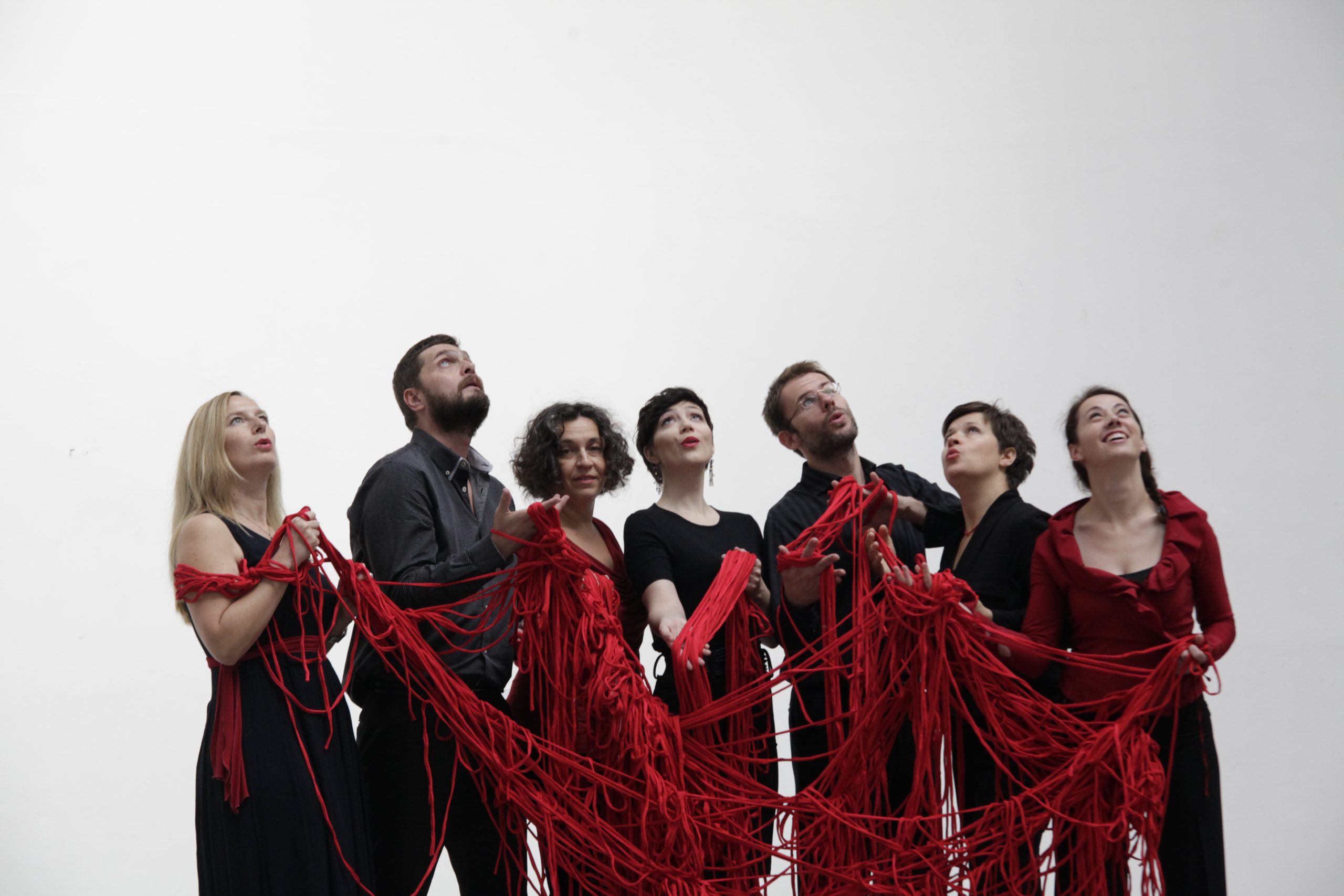
Imagine a string orchestra in which each section is represented by a single musician. That is exactly the concept Vienna Chamber Symphony – a unique ensemble that combines the richness of orchestral music with the refinement of chamber music. In addition to performing original string quintets by composers such as Antonín Dvořák, George Onslow and Joseph Eybler, the ensemble is passionately devoted to the interpretation of symphonic and operatic works arranged exclusively for this formation.
Based in Vienna and composed of top musicians, this ensemble is united by a shared artistic vision: to merge individual talents into a unique and dynamic musical experience.
Structured like an orchestra, with a carefully selected core of musicians who rotate with ease and flexibility, the ensemble's repertoire spans the period from Viennese classical to contemporary music.
The Wiener Kammersymphonie performs throughout Europe and is regularly invited to prominent festivals and stages in South America – including Chile, Mexico, Brazil, Colombia, Argentina, Uruguay and Peru.
Renowned for their expressive power and technical brilliance, the Wiener Kammersymphonie continually delights audiences and critics alike. Their ability to evoke the grandeur of a full symphony orchestra with just five strings has been described as extraordinary.
“…the Wiener Kammersymphonie string quintet, unsurpassed in intonation, soft sound and ironic descriptive depth…”— Giornale dell'Umbria
“The Wiener Kammersymphonie manages to capture the grandeur of Beethoven’s symphonic language with exceptional finesse. The use of a fifth string instrument is particularly noteworthy, giving the ensemble a stunning, sometimes almost limitless depth. Their performance was fiery and inspired, with each musician playing at the peak of their artistic power. They brilliantly managed to convey the richness and power of a full orchestra. The audience responded with a well-deserved, enthusiastic standing ovation.” — Jan-Willem van Ree, Program Director, Edessa Concert Hall
"The concert concluded with a piece fairy tale pictures (Fairytale pictures) Erich Wolfgang Korngold (1897–1957), a Jewish-Austrian composer who later became a naturalized American citizen and gained a reputation in Hollywood, where he won two Academy Awards for film music. His music is characterized by expressive charm, rich contrasts, and refined rhythmic and tonal imagination. The ensemble provided a superb interpretation of this evocative work.
For the addition, two pieces imbued with an irresistible Viennese spirit were performed: Your love (The sadness of love) by Fritz Kreisler and lively polka Under Thunder and Lightning (Under thunder and lightning) by Johann Strauss. The enthusiastic audience rewarded the exceptional performers with a warm and well-deserved ovation.” El Mercurio, Santiago de Chile