
Programme
Piazzolla: Buenos Aires summer from the cycle Four Seasons of Buenos Aires (arr. Thomas Fellow / Sergio Assad)
R. Dirks: Rafa
P. Steidl: Pictures from Moravia
J. Hendrix: Purple Haze (arr. Reentko Dirks) – solo
A. Piazzolla: Concerto for quintet (arr. Thomas Fellow)
Paganini: Selections from 43 Ghiribizzi - only
T. Fellow: Medusa – trio
T. Fellow: Porthos from the cycle The Four Musketeers
F. Zappa: Father O'Blivion (arr. Christian Buchmann / Thomas Fellow)
R. Dirks: Dance not Dance
Astor Piazzolla (1921–1992) is one of the most important composers of the 20th century who redefined tango through his style called new tango, in which he combines authentic Argentine dance rhythms with the harmonic, formal and contrapuntal techniques of classical music and jazz. Cycle Las Cuatro Estaciones Porteñas (The four seasons of Buenos Aires) evokes the rhythms of the Argentine urban landscape through the different seasons of the year. Originally composed and performed separately, the pieces were later combined by Piazzolla into a single cycle and occasionally performed as such. Composed for Piazzolla's quintet, consisting of violin, piano, electric guitar, double bass and bandoneón (Argentine accordion), they depict a series of seasons in the Argentine capital, as indicated by the adjective "porteño" referring to those born in Buenos Aires. They are played in the order Otoño (Autumn), Invierno (Winter), Primavera (Spring), Verano (Summer), that is, in the opposite order of the seasons in the Northern Hemisphere. The first, Verano Porteño, was composed in 1965, an energetic composition that evokes the typically windy weather of that season, as music for the drama Melenita de oro by AR Muñoz. In 1969, Piazzolla composed the remaining pieces. Summer is heavy and humid, while Autumn is refreshing, filled with jazz elements. Winter is dramatic and shocking with cold weather coming from Antarctica, while the last bars of the composition carry a hint of warmth and the awakening of a new spring. The composition has been covered in many arrangements by different bands.
Concerto for quintet Astor Piazzolla comes from his ensemble work that includes bandoneón, violin, guitar, bass and piano. The piece transcends traditional concertos for soloist and orchestra by treating the quintet as a “mini-orchestra” in which each instrument is given a solo role at different moments, while simultaneously participating in dense textures and rhythmic dialogues. The constant exchange of melodic lines between the instruments creates a rich polyphony, and the rhythmic impulses of Argentine tango give the work a specific pulsating energy. Thomas Fellow’s arrangement adapts it for guitar ensemble.
Reentko Dirks is a contemporary composer and member of a quartet whose works Rafa i Dance not Dance were created in the second decade of the 21st century. In them, Dirks explores different rhythmic structures and polyrhythms, often using fragmentary dance gestures, reminiscent of flamenco or other folkloric styles, placing them within rhapsodic forms characterized by a natural, exciting flow and great virtuosity.
Pavel Steidl, Czech guitarist and composer, in Pictures from Moravia (Pictures from Moravia) integrates motifs of Moravian folk music and stylistic figures of old folk melodies into a contemporary compositional language, which includes various extended guitar playing techniques and even singing in the middle part of the composition, creating a special sound ambience.
Niccolo Paganini (1782–1840) was the greatest violin virtuoso of his time, leaving his mark on modern violin technique. It is less known that in addition to a number of works for the violin, he also wrote about a hundred pieces for the guitar, which was an increasingly popular solo instrument at the time. His work 43 Ghiribizzi (43 whims) for guitar solo he wrote "for a young girl in Naples", who must have been a talented and technically very capable player, because these musical whims explore the entire range of moods, styles and technical bravura, demonstrating the great expressive power of the guitar, and are considered an example of true Romantic virtuosity and the influence of improvisational practice on guitar practice of that time. In them, Paganini used various operatic themes by composers such as Rossini, Paisiello, Süssmayr, Mozart and others.
Thomas Fellow, as a composer and arranger and a member of the European Guitar Quartet, in compositions Medusa i Porthos (The Four Musketeers) is inspired by mythological themes and literature, seeking inspiration for compositions full of complex contrasts and thematic transformations. Medusa, inspired by a character from Greek mythology, is "a wild concertante piece, filled with folkloric sound and sudden changes of measure, vividly depicting the intricate and deadly figure of Medusa." Porthos is a fragment of a composition The Four Musketeers for the European Guitar Quartet and is intended for guitarist Pavel Steidl.
Jimi Hendrix (1942–1970), one of the most influential guitarists in rock music, in the composition Purple Haze (1967) brings the essence of the sixties psychedelic rock idiom. The arrangement for guitar quartet by Reentko Dirks transforms the electric guitar energy of the original into acoustic polyphony, retaining the motivic conciseness and characteristic pentatonic and blues gesture within formally articulated structures.
Frank Zappa (1940–1993), a composer and improviser whose music is extremely heterogeneous and often rhythmically and harmonically demanding, signs Father O'Blivion, a composition written in the 1970sIn the arrangement by Christian Buchmann and Thomas Fellow, the rhythmicity of the composition is retained as well as its ironic note, while the harmonic simplicity is the basis for a playful form, filled with fragments in mutual dialogue, enhanced by the complex melody of the four guitars.
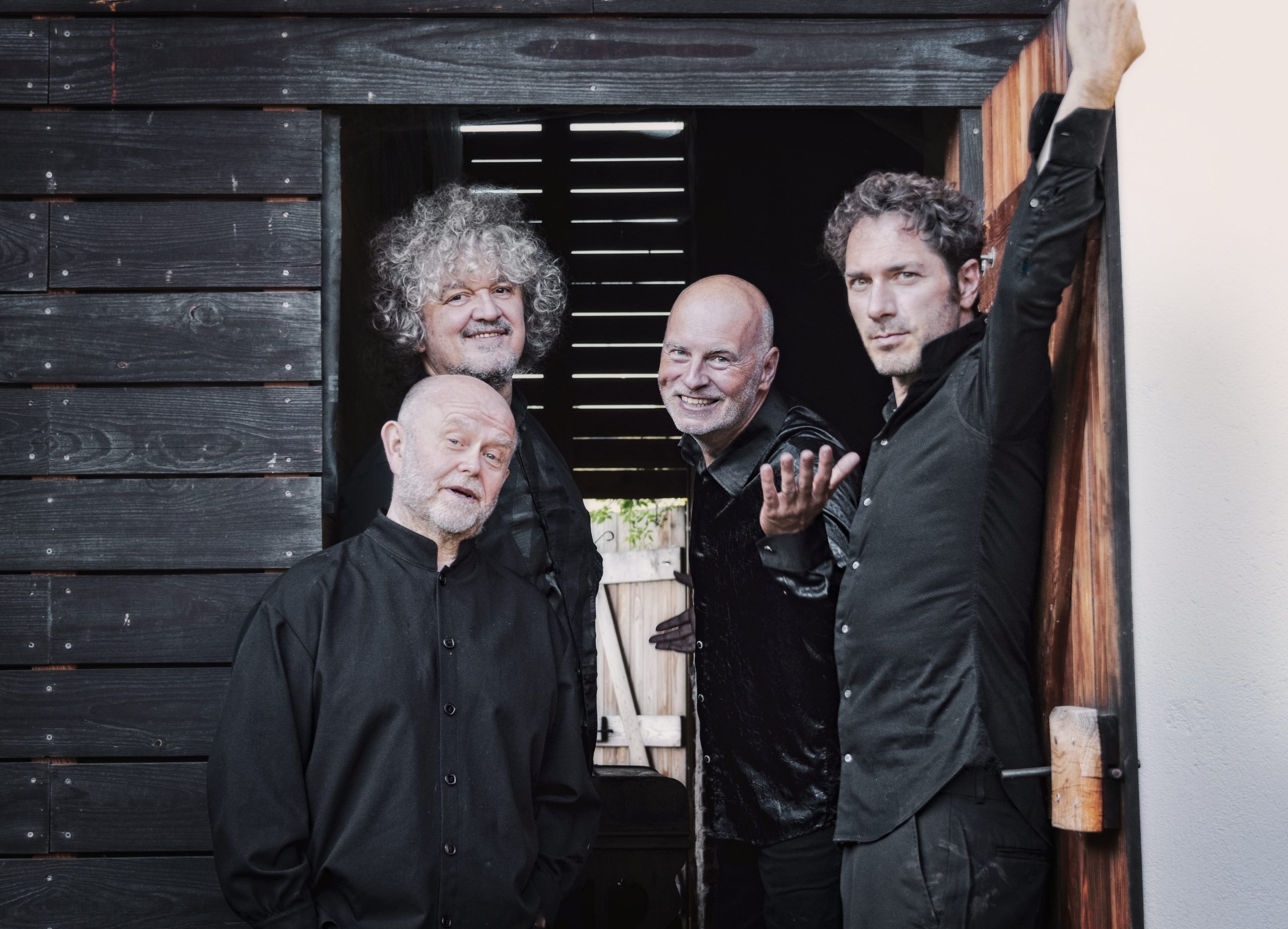
European Guitar Quartet
After approximately 60 concerts in 16 countries, including prestigious venues such as the Concertgebouw in Amsterdam, Buttenwieser Hall in New York and the Tchaikovsky Hall in Moscow, as well as festivals such as the Bergen Music Festival (N), the Ravinia Festival in Chicago (USA) and the Monterrey Guitar Festival (Mexico), the final notes of the tour Dance echoed in the Central Hall in Calcutta, India.
New album by the European Guitar Quartet, Fortune, will be released in October 2024. In addition to music by Frank Zappa, Carlo Domeniconi, and Harry Belafonte, the album also features compositions by Thomas Fellow, Pavel Steidl, and Reentko Dirks – contemporary works that blend concert music, world music, and jazz.
Two legends of classical guitar meet two virtuosos of modern fingerstyle technique, creating an innovative, contemporary sound for the instrument. Don't expect classical guitar - expect a whole new concert guitar experience.
"The birth of a new shining star in the concert sky" – this is how Dresdner Neueste Nachrichten described the ensemble's debut concert in Dresden in the spring of 2012. The meeting of two world stars of classical guitar with two outstanding representatives of the modern acoustic guitar quickly won over both critics and audiences.
After their debut concert, the quartet immediately received invitations to perform at festivals around the world, and their musical expression inspired artists such as Gior Feidman. In 2017, they toured the US, performing in New York, Los Angeles, San Francisco and at the famous Ravinia Festival in Chicago. In 2018, they made their Russian debut at the world-famous Tchaikovsky Hall in Moscow, their first appearance in Poland at the festival Silesian Guitar Autumn, and guested at Hamburg Guitar Days. In 2019, they held another US tour, as well as concerts in India and Germany.
Zoran Dukić (Croatia) has won more competition awards than any other guitarist in the world. He has taught at some of the most successful guitar studios in Europe and is currently a professor at the Royal Conservatory in The Hague. He delights audiences with his exceptional virtuosity and dynamism, whether as a soloist, in a duo with Aniella Desiderio or in various chamber ensembles.
Pavel Steidl (Czech Republic) is considered an icon of the instrument. His interpretations of classical-romantic music are unique and intense. He has performed all over the world and at the most important festivals, and has long been recognized as one of the best guitarists of his generation. In 1982, he won one of the most prestigious competitions of the time – Radio France in Paris, and today he teaches at the Prague Academy of Music.
Thomas Fellow (Germany) is a first-class acoustic guitarist and one of the most successful and influential accompanists on the instrument, including through his innovative duo Friend 'n Fellow, with nearly 2000 concerts with Ray Charles, Luther Allison and Tommy Emmanuel. As a composer and arranger, he has been published by Schott Music, and runs a pioneering course Acoustic Guitar at the Dresden Academy of Music and has performed in more than 30 countries.
Reentko Dirks (Germany) has gained international recognition not only as an impressive guitarist and percussionist, but also as a composer whose works have won awards and been performed in programs such as Cirque du Soleil and the Semperoper in Dresden. He has also been recognized as a guitarist for the bands MASAA (German Jazz Award 2021) and Ksenija Sidorova (Echo 2017).
These four musicians, each a highly respected name in the music world, have set themselves the task of combining the concert guitar tradition with the expressive and dynamic sounds of modern music.