
Nonconformist-minded from the beginning of his musical career, since he was repeatedly declared "worthless" at the Paris Conservatory, until his last works - the anarchic ballets Mercure and Relâche, Erik Satie's work always indicated an alternative version of the work of art, as well as an alternative version of the process itself. creation of the work. His compositions are the result of his efforts to constantly reexamine the music he heard around him, especially the musical practice of the 19th century. Theater and cabaret music is strongly present in his aesthetics, which developed less under the influence of academic education at the Conservatory, which he described as a kind of penitentiary, and more under the influence of the fun music he himself played in the famous Chat Noir cabaret. He embraced the bohemian lifestyle and befriended poets such as Contimen de Latour, Alphonse Allais, Joséphin Péladan, as well as composers – from Debussy, with whom he cultivated a close friendship, to Ravel and Milhaud. His compositions, often with bizarre, incomprehensible names, in their lapidary, technically limited scope, bring more than a hint of the music of the 20th century - from organized chromatic totality to minimalism. In their simplicity, however, they are brought to perfection, filled with sharp irony and always in touch with contemporary artistic events. Gnossiennes is a series of compositions for piano, tinged with an oriental note, i.e. using a mode with an elevated fourth degree, melismas in melody and static harmony, and free meter. Their name is associated by some with the ritual dance in the labyrinth that Theseus danced after defeating the Minotaur. Another explanation is Satie's connection with Gnostic sects, at the time when he began to compose gnossiennes. Out of a total of six compositions that today are united by that name, only the first three were published during Satie's lifetime (1893), while compositions 4-6 were published only in 1968, published by Satie's friend Robert Caby. Gnossienne no. 4 was created in 1891 and, like the other two, is marked only with tempo (Lent).
Satie's music for Entr'acte by René Clair is the first synchronized film score. The film Entr'acte was commissioned as a prologue and interlude to the Dadaist ballet Relâche (created in collaboration between Francis Picabia and Erik Satie). The film premiered together with the ballet in December 1924 at the Théâtre des Champs-Élysées in Paris. The film's prologue features Satie himself (as one of the two men jumping up and down discussing the cannon on the roof of the building). Satie writes the music for the film in a special score (Cinéma), indicating the sections that should correspond to certain events in the film, which is why it is one of the first examples of musical dubbing of a film.
One of the founders of the style of minimalism and at the same time the most respected American composers, Philip Glass, is also a sought-after film composer, who got his first film experiences already during his studies, when, after studying at the University of Chicago and New York's Juilliard School, he went for training with Nadia Boulanger in Paris. During this period he assisted Ravi Shankar on the music for the film Chappaqua. Shankar's music, which he transcribed for Western musicians, impressed him more than the avant-garde music he heard in Paris. In that period, his minimalist style began to appear, first in the music for the theater troupe Mabou Mines (for Beckett's Drama in which two soprano saxophones repeatedly repeat the same intervals in different rhythms, and then in Music for an ensemble and two actresses, which includes the recitation of a recipe for souffles, accompanied by a brass sextet). Soon, he develops a completely recognizable style of strong diatonic, harmonically static situations with complex rhythmic patterns, and creates a huge oeuvre that ranges from chamber and solo, to concert,
symphonic, vocal, ballet, opera, stage, television and film music. The series of five Metamorphoses (1988) was inspired by Kafka's short story The Transfiguration. Metamorphosis 2 also served as the theme material for The Hours, an award-winning 2002 psychological drama directed by Stephen Daldry. Philip Glass' film score The Hours was nominated for the world's most prestigious awards (Academy Award - Oscar, Golden Globe, Grammy, etc.), winning the BAFTA Award for best film score. Excerpts from his previous works, such as the opera Satyagraha, were also used in the music. The music was arranged for piano solo by Michael Riesman and Nico Muhly.
Zrinka Matić
***
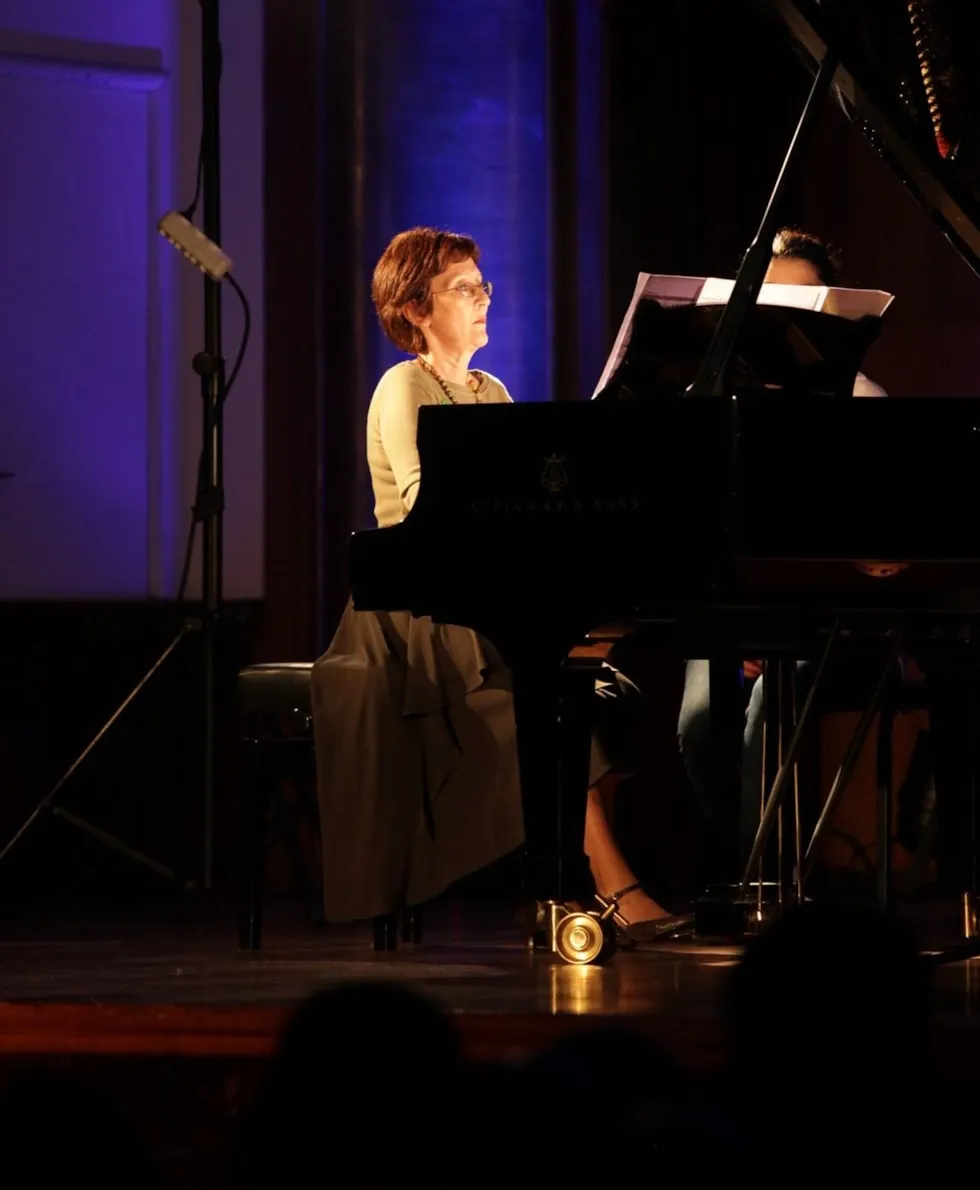
As one of the leading pianists dedicated to New Music, Branka Parlić performs music by minimalist and post-minimalist composers of the second half of the 20th century and the first decades of the 21st century. Her performances of Philip Glass, Michael Nyman, Wim Mertens, Arvo Pärt and others have more than five million views on YouTube, making her one of the most noted New Music performers.
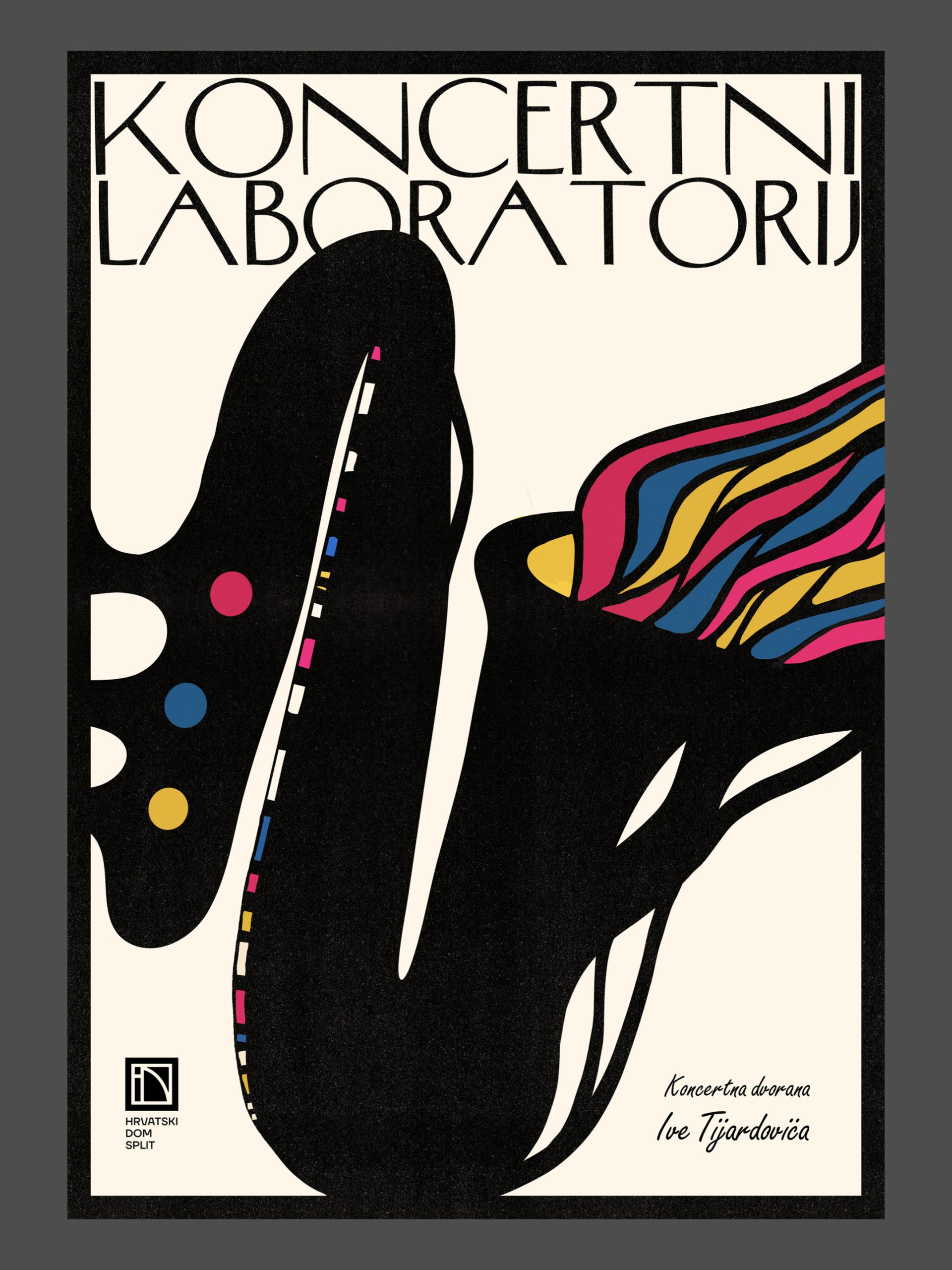
One of the recognizable aspects of her concerts is a specific visual identity, with special attention focused on the design of lights and visuals, and even the design of flyers and posters for concerts.
Since 2004, the British television CLASSIC FM TV has started broadcasting the video work Chaos by Charles Stewart to the music of Erik Satie's Gnossienne No. 1 performed by Branka Parlić, and the same television channel broadcast a recording of her concert performance of the composition Metamorphosis no. 2 by Philip Glass.
Branka Parlić performs throughout Europe at solo recitals and various music and film festivals, and holds lectures on the development of New Music. She is a frequent guest in Serbia, Montenegro, Macedonia, Croatia, Slovenia, France, Germany, Austria, Hungary, Switzerland, the Netherlands, England, Denmark, etc. She has participated in renowned classical music festivals, such as the Zagreb Music Biennale, the Gandusian Festival and the Motovun Film Festival. festivals in Croatia, Grad Teatar - Budva in Montenegro, Skopje Summer and Bitola Festival in Macedonia, NOMUS Festival in Novi Sad, Ring Ring Festival, Jazz in Church Festival in Bucharest, NIMUS Festival in Niš, Film Screenplay Festival and Exit Festival in Serbia etc.
After graduating from the piano department of the Faculty of Music in Belgrade in 1979, in the class of Professor Olga Mihailović, Branka trained with Professor Pierre Sancana at the International Summer Academy in Nice. Since the 1980s, it has been dedicated to promoting and performing the music of French composer Erik Satie, as well as minimalist and post-minimalist composers of the 20th and 21st centuries. Hers is also the first recording of Erik Satie's music in the south-eastern parts of Europe, LP Initiés from 1988. In 1999, he released old and new recordings of performances of Satie's works, Initiés '88 – Initiés '99, and in 2006 he released works for solo piano by Philip Glass on the CD Metamorphosis. In November 2012 she recorded new material for the album Satie & Beyond at the Harmonie Centrum Concert Hall in Leeuwarden, with works by Erik Satie, Graham Fitkin, Jeroen van Veen and Philip Glass. She presented the same program in 2013 in London (Covent Garden) and Liverpool (Hope University).
In addition to solo piano and chamber repertoire, Branka also performs music composed for films by Erik Satie, Michael Nyman, Philip Glass and Nino Rota. During 2011, she held a series of concerts dedicated to the hundredth anniversary of the birth of film music composer Nino Rota.
She premiered 20 piano etudes by Philip Glass together with pianists Nada Kolundžija and Nataša Penezić at the Self Portrait concert in Belgrade in 2015. In the same year, she played the Satie & Beyond program at the Lunchtime concert series at the Royal Festival Hall in London. Together with the pianist Nataša Penezić, she participated in the first integral performance of Erik Satie's famous work Vexations in Aarhus in 2016. He holds two concerts on prestigious London stages: St Martin in the Fields in 2019 and St John's Smith Square in 2020.
For the new double record Initiés 2017, published by Triston Master Recordings SCHOPPER in Switzerland and co-published Odličan Hrčak in Serbia, she received a silver medal at the Global Music Awards 2020.
Branka Parlić works as the artistic director of the New Ears concert cycle for New Music. She is a member of the Ensemble for Other New Music (ADNM), which has been active since 1977 and is dedicated to keyboard music.
Erik Satie (1866-1925)
Philip Glass (1937)
Music from the film The Hours - a selection