

Tango is more than music and dance. Its name, still shrouded in etymological uncertainty, already carries within it echoes of displacement, migration, resistance and appropriation. Some claim that the word originates in Africa, where it designated a space for dancing, drums and gatherings; others link it to the Spanish verb tañer – “to play”. In any case, tango was born from encounters – those desired and those imposed by history.
In the 19th century, the term tango was used throughout Latin America and Spain for a variety of musical and dance forms, from carnival processions to flamenco. In Buenos Aires and Montevideo, where tango would achieve its clearest identity, it sprouted on the fringes of society where European settlers, Afro-Latin American rhythms, and Pampan traditions met. There, among the marginalized and working class, tango was a form of nostalgic longing and bodily expression. Its first steps and melodies reflected social tensions and the hybridity of identities that had not yet been anchored.
Musically, tango is the child of many parents: the Cuban habanera and contradanza , the Brazilian maxixe , the Spanish flamenco , and local forms such as milonga and payada . By the mid-19th century, the habanera had already permeated all of Latin America, and in Brazil and the Río de la Plata region, the name "tango" was often synonymous with the form. It was these Afro-Cuban rhythms with frequent syncopations that gave tango its musical origins. But what makes tango unique is its ability to take on, transform, and emotionally exaggerate these models in an urban and melancholic matrix.
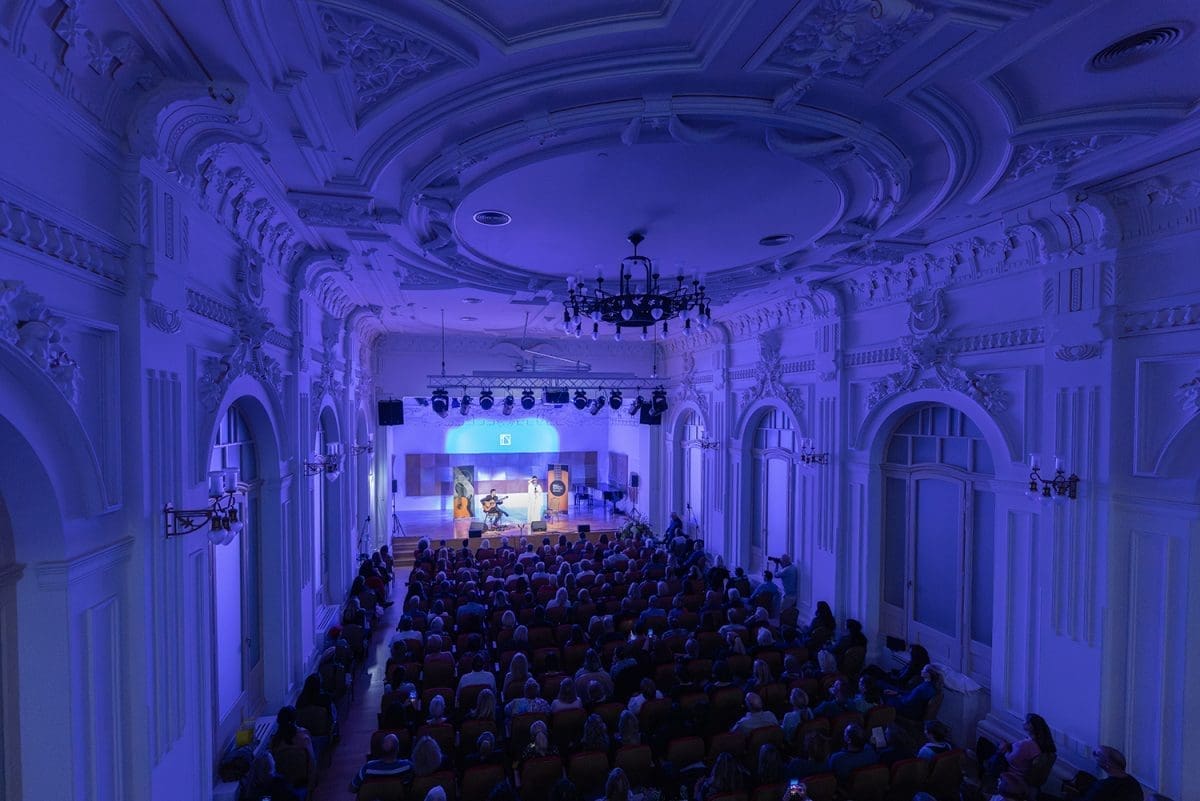
The concert "Reencounters" - ReEncuentros evokes precisely this historical and sonic layering of tango. It is a project in which classical tango is not only reproduced, but also discussed. Through new arrangements, improvisations and musical digressions, tango here re-encounters its own origins - with African rhythms, Cuban sensuality, Balkan melancholy and classical discipline.
Tango had already spread beyond its geographical borders in the first decades of the 20th century – Paris, London, New York, Berlin – but its symbolism remains rooted in the Argentine collective memory. The choreography of tango, in which an active man and a passive woman are opposed, has often been interpreted as a stage sublimation of social tensions, masculinity, and even the erotic dynamics of everyday life. Today, tango is no longer a form of “museum” nostalgia. It is a space of recognition, resistance, and innovation. This concert offers exactly that: tango as an experience that never stops speaking. And through the performance of completely different performers, each of whom offers a different experience of music and music-making.
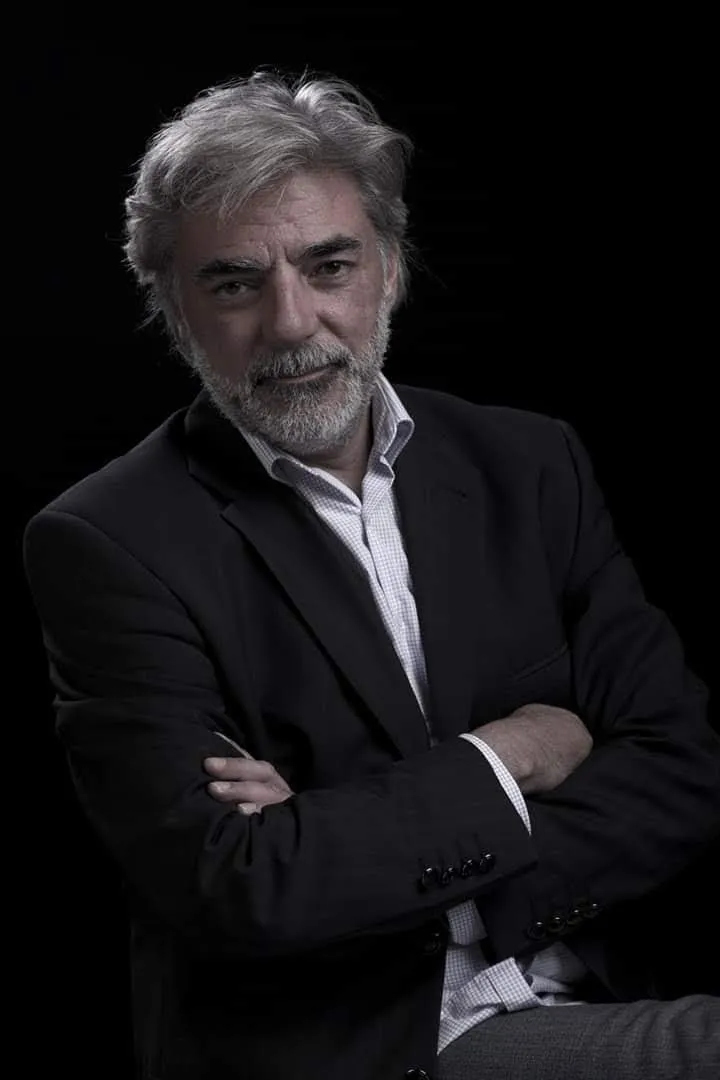
Eduardo Hubert is an Argentine pianist, composer and conductor. He graduated from the National Conservatory of Buenos Aires and studied in Italy with Fausto Zadra, Carlo Zecchi and Guido Agosti, and attended conducting studies with France Ferrara and Leonard Bernstein. He holds the "Licence de concert" and the "Prix de virtuosité" from the Lausanne Conservatory. In recent years, he has dedicated himself to chamber music, which he teaches at the Pescara Conservatory and as a visiting professor in Karlsruhe. He has been the artistic director of the Martha Argerich Festival in Buenos Aires since 2000. His compositions have been performed all over the world and broadcast on RAI, BBC and ABC. In November 2015, he conducted and played with the Saint Petersburg Philharmonic Orchestra. In 2016, he created the ensemble ReEncuentros, dedicated to classical music and sounds from around the world. In 2017, he played concerts in L'Aquila and at the opening of the Bologna Festival season with Martha Argerich and his ensemble ReEncuentros.
In 2021, he premiered his piece "Las vueltas del 8" at Martha Argerich's eightieth birthday at the Chateau de Fontainebleau.
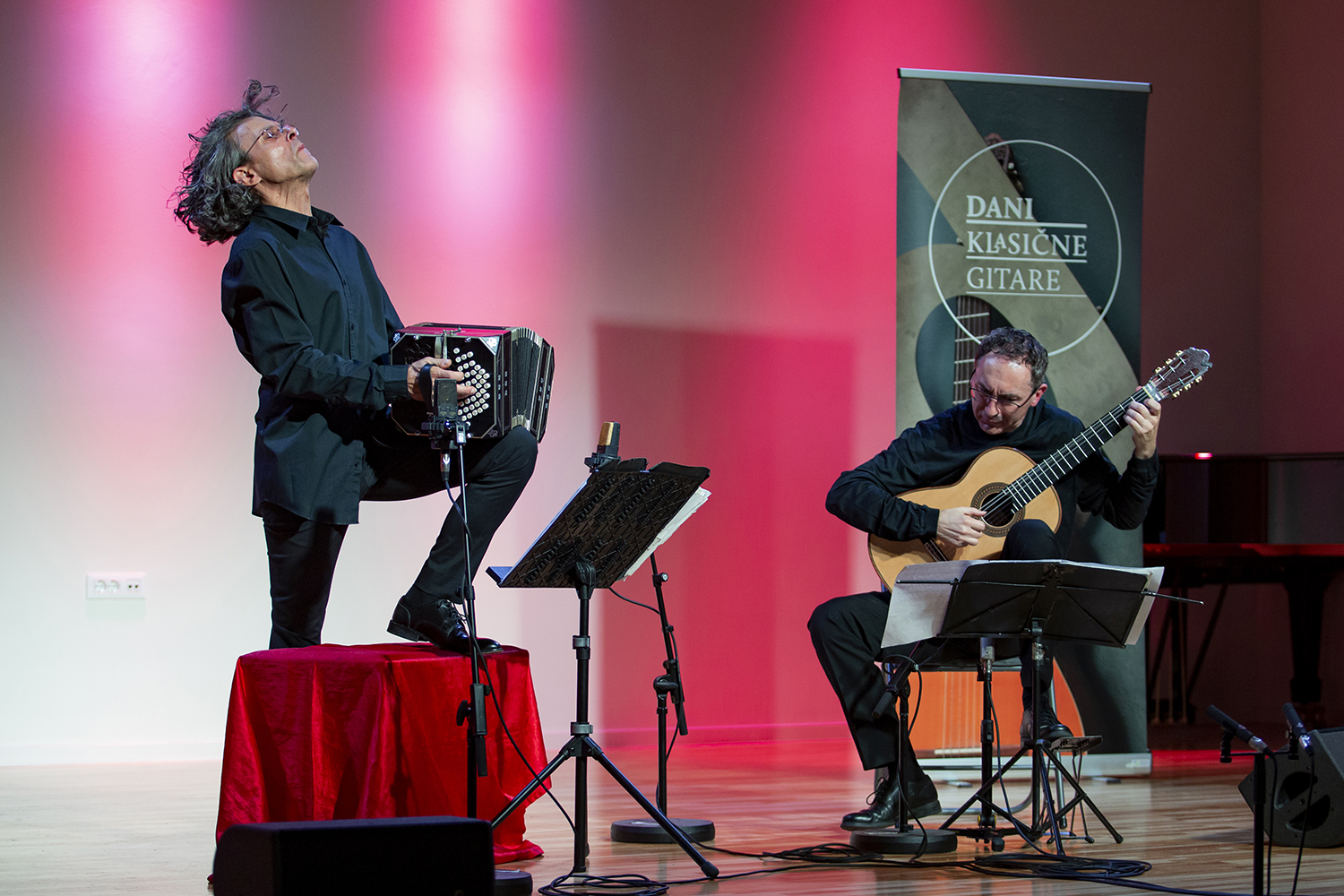
Marcelo Nisinman is a composer and bandoneon accordion master born in Buenos Aires and currently based in Switzerland. He studied bandoneon with Julio Paneo, counterpoint and harmony with Guillermo Graetzer in Buenos Aires, and composition with Detlev Müller-Siemens in Basel. Nisinman's music offers a new, diverse and original dimension rooted in the music of Buenos Aires ( Musica Porteña ).
Noé Inui is a violinist born in Brussels. He studied in Brussels, Paris, Karlsruhe and Düsseldorf. He has won numerous awards, including the Prix Julius Bär (2012) and a nomination for the “Classical Futures Europe Artists” in 2020. He regularly performs with orchestras such as the Japan Philharmonic and the Tokyo Symphony and collaborates with renowned conductors. As a chamber musician, he collaborates with Vassilis Varvaresos and Mario Häring and is a co-founder of the Corneille Quartet. He has recorded seven albums, the latest of which is dedicated to the sonatas of Eugène Ysaÿe. He teaches at the universities of Düsseldorf and Mannheim and gives master classes around the world.
Zoran Marković graduated from the Academy of Arts in Podgorica and received his master's degree from the Faculty of Music in Belgrade. He studied in Venice, Cremona, Munich and Salzburg. He has won numerous awards, including the Prešeren Award (1999) and the O. Župančič Award (2004). As a soloist, he has performed with orchestras such as the Slovenian Philharmonic, the Belgrade Philharmonic and the RTV Slovenia Symphony Orchestra. He has performed at prestigious festivals such as the Ljubljana Summer Festival, the Kuhmo Chamber Music Festival and many others. Since 2004, he has been a professor at the Academy of Music in Ljubljana, and since 2006, a regular external associate of the RTV Symphony Orchestra. In recent years, he has devoted himself to conducting symphonic and opera music, and regularly collaborates with the Orkesterverein Feldkirchen.
Astor Piazzolla
Eduardo Hubert
Marcelo Nisinman